
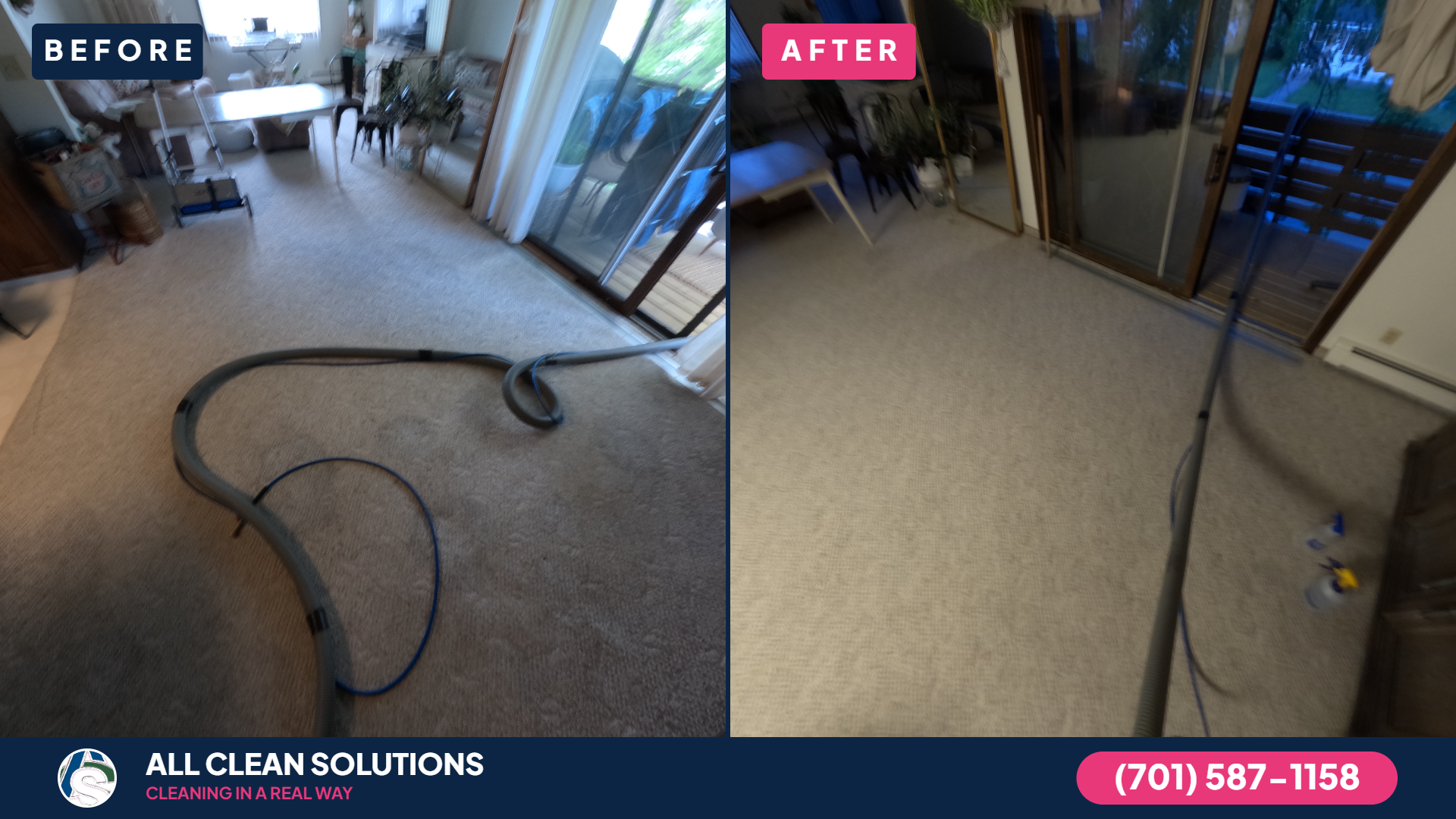
A fresh pet accident and an odor that has returned for months are not the same carpet problem. Acting carefully at the beginning can limit spread, while older contamination may require inspection below the visible surface. Neither situation should start with a promise that every stain or odor will disappear.
First steps for a fresh accident
Remove solid material without pressing it farther into the carpet. For liquid, use clean absorbent towels and blot from the outside toward the center. Apply steady pressure, change towels, and repeat while material is still transferring. Scrubbing can spread the spot and distort the fibers.
Avoid mixing household cleaners, deodorizers, disinfectants, and stain removers. A second product can react with the first, affect color, leave residue, or make professional treatment harder to plan. If you use a product approved for the carpet, test it in an inconspicuous area and keep the label so the cleaner knows what was applied.
Why an odor can return after the top looks clean
Liquid can travel through the carpet face into the backing, padding, seams, or material below. Surface treatment may improve the visible spot while leaving deeper contamination. Humidity or new moisture can make an old odor noticeable again. A mark can also reappear as material moves toward the top during drying.
Useful information for an inspection includes:
- Where the accident happened and how large it was
- Whether it is recent or recurring
- What products or machines have already been used
- Whether the carpet, padding, or subfloor was previously replaced
- Whether the odor changes with humidity or after other cleaning
What professional treatment may involve
All Clean Solutions begins by checking the carpet, its colorfastness, the visible condition, and signs that contamination may extend below the face fibers. Surface cleaning may include prespray, mechanical agitation, hot-water extraction, rinsing, dry passes, and grooming.
When appropriate, a targeted subsurface treatment can place solution below the carpet and extract material back out. This is different from flooding the room. It is also not the same as removing padding or repairing a subfloor. All Clean Solutions does not remove or replace carpet padding.
If contamination is widespread, repeatedly untreated, or embedded in materials that cannot be reached through cleaning, replacement or another specialist may be the more practical recommendation. Saying so is better than charging for a process unlikely to meet the customer’s goal.
Set expectations before the visit
Pet stains and odors are treated, but removal is never guaranteed. Fiber type, dyes, age, prior chemistry, the amount of contamination, and how far it traveled all affect the result. One isolated recent spot may call for a different scope than repeated contamination across a whole room.
Before service, pick up small items and point out every known location. A walkthrough helps establish which rooms and treatments are included. Light, practical furniture may be moved only when requested and quoted; heavy or loaded furniture is not moved, and an additional charge may apply.
Typical drying is often about two to four hours, depending on airflow, temperature, humidity, carpet construction, and treatment depth. Keep pets and unnecessary foot traffic off the carpet until it is dry when possible.
Review pet-spot and odor options within our carpet cleaning service, or request a Bismarck-Mandan estimate with the number of rooms and affected areas.