
What's included
Why it matters
Snow, drifting, packed accumulation, and refreeze can make North Dakota properties harder to access and maintain. A written plan for priority areas, trigger depth, obstacles, stacking locations, and salt or sand helps homeowners, businesses, and property managers understand what will be serviced during each winter event. No snow plan can eliminate every winter hazard, so conditions and service needs are reviewed throughout the season.
Bismarck private-property snow planning
All Clean Solutions quotes private-property areas such as driveways, parking areas, private walks, entrances, loading zones, and agreed detail work. City crews manage public streets; a private service plan should also account for driveway windrows, corner visibility, mailboxes, hydrants, dumpsters, drainage, and where snow can be stacked.
Bismarck publishes current sidewalk and private-snow-placement guidance, including property-owner responsibilities. Customers should review the city's latest rules; ACS service does not replace municipal operations or guarantee legal compliance.
Snow removal for homes and businesses
Residential service can include driveways, private walks, entrances, and other quoted areas. We discuss vehicles, gates, mailboxes, curbs, drainage, and where snow can be stacked before confirming the service plan.
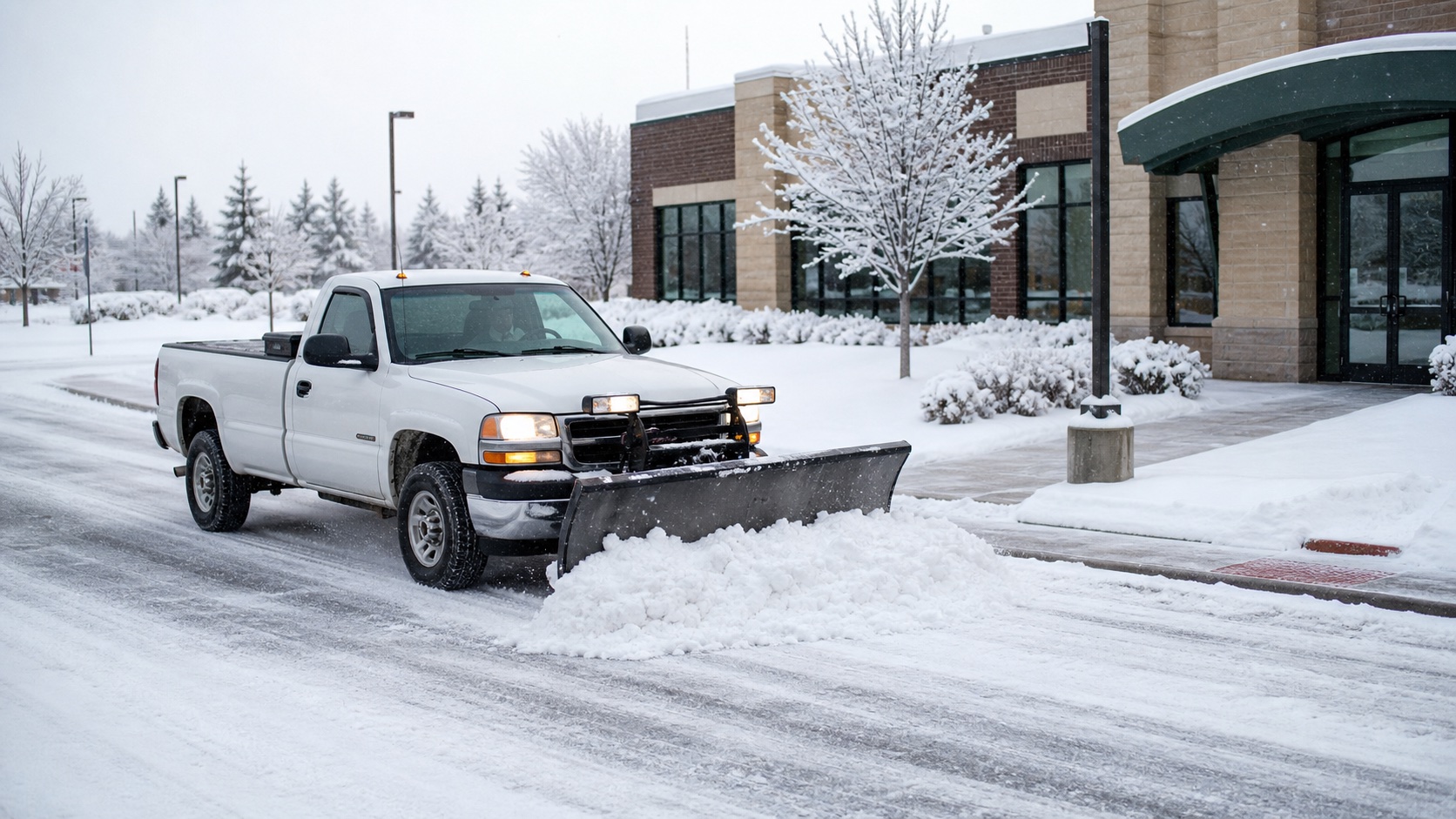
Commercial snow removal can cover parking lots, entrances, accessible routes, fire exits, loading areas, and customer or employee walkways. Priority areas, trigger depth, operating hours, materials, and documentation are agreed upon for the property.
Salt, sand, stacking, and snow hauling
Salt is used to help loosen or melt snow and ice when temperature and conditions allow. Sand adds traction but does not melt ice. The material and timing depend on temperature, surface conditions, traffic, and the agreed scope.
Snow is stacked in planned areas when space allows. When piles reduce visibility, parking, drainage, or usable space, snow hauling may be added to the service plan.
How to prepare for snow service
A clear work area helps equipment reach more of the quoted property. Tell us about fixed obstacles, fragile areas, drainage problems, and preferred stacking locations before the first event.
Service area, safe dispatch, and estimates
Snow-removal requests are accepted 24 hours a day throughout the approximate 50-mile service area. Request intake is not a promise of immediate dispatch or a fixed arrival time.
Service timing depends on accumulation, wind, visibility, road conditions, closures, route capacity, the property's trigger depth, and the agreed priority plan. All Clean Solutions does not dispatch when official restrictions or actual conditions make travel unsafe.
Estimates are free and may be started by telephone, from property details and photos, or with an on-site walkthrough. A travel charge or minimum job size may apply outside the immediate Bismarck-Mandan area and is discussed before service is confirmed.
Our process
Pre-season site walkthrough
We map your property, identify obstacles, snow stacking areas, and priority zones before the first snowfall.
Trigger-based scheduling
When a trigger depth is part of the agreement, service is scheduled around that trigger, property priorities, conditions, and crew availability.
Plowing and clearing
The parking, walking, entrance, loading, and stacking areas listed in the service plan are addressed with methods suitable for the property and current conditions.
Salt and sand application
Salt or sand is applied when included in the plan and appropriate for the temperature, surface, traffic, and remaining conditions.
Service review
When documentation is included in the plan, the agreed service details can be recorded for the property manager's files.
Frequently asked questions
Do you offer seasonal contracts?
Yes. Seasonal and per-event arrangements are available. Trigger depth, covered areas, materials, billing, and expected timing are defined in the individual service plan.
How far will All Clean Solutions travel for snow removal?
We accept snow-removal requests within approximately 50 miles of Bismarck. The exact address, route capacity, road conditions, closures, equipment availability, and safe return travel are reviewed before service is confirmed.
What is your response time during a storm?
Timing depends on the agreed trigger, snowfall rate, wind, drifting, visibility, road conditions, closures, route capacity, and property priorities. Requests are accepted 24 hours a day, but request intake is not a promise of immediate dispatch or a fixed arrival time.
Do you also clear sidewalks and building entrances?
Yes. Sidewalks, entrances, accessible routes, and fire exits can be included. The specific areas and order of service are defined in the property plan.
Should snow be cleared during a storm or after it stops?
It depends on accumulation, wind, property traffic, and the service plan. During a long or heavy storm, one or more maintenance passes may help keep priority routes usable before a final cleanup after the snowfall ends. Smaller events may only need a post-storm visit.
When is a snow blower better than a shovel?
A shovel can be practical for steps, short walks, edges, and detail work. A snow blower is usually more efficient for longer walks, deeper snow, and larger areas where a plow cannot fit. The best choice depends on snow depth, drifting, surface type, and available space.
When should a parking lot be plowed?
The timing should be agreed upon before winter and based on the property's trigger depth, operating hours, traffic, and priority access needs. Busy properties may need service during a storm, while lower-traffic lots may be cleared after snowfall ends.
What is the difference between salt and sand for ice?
Salt is a deicer that helps melt snow and ice when conditions allow. Sand does not melt ice; it adds traction. Temperature, surface conditions, and the property's needs determine whether salt, sand, or a combination is appropriate.
When should salt or sand be applied?
Salt or sand may be applied after plowing, during refreeze conditions, or when packed snow and ice remain, depending on temperature, surface conditions, traffic, and the agreed scope.
What areas should a business clear first?
Priority areas commonly include accessible parking and routes, main entrances, fire exits, high-traffic sidewalks, drive lanes, and loading or delivery access. The exact order should be documented in the property's winter service plan.
Should vehicles and movable obstacles be cleared before plowing?
Yes, whenever practical. Moving vehicles, trailers, carts, and other obstacles gives equipment more room to clear the lot and reduces hard-to-reach snow. Tell us about fixed obstacles, curbs, drains, and designated snow-stacking areas during the site walkthrough.
Why is packed snow harder to remove?
Traffic compresses snow and can bond it to the pavement, especially through melting and refreezing. Earlier mechanical removal can reduce compaction, while already-packed areas may need scraping, deicing, traction material, or follow-up treatment.
What information is needed for a snow removal estimate?
Helpful details include the property address, parking-lot and sidewalk areas, business hours, priority entrances, loading docks, known drifting or drainage problems, desired trigger depth, ice-management needs, and where snow may be stacked.
What should customers expect during a major regional storm?
Service can take longer when snowfall, wind, drifting, low visibility, road restrictions, and regional demand affect many properties at once. Dispatch may be delayed or suspended when travel is unsafe. Crews may make maintenance passes and return for detail work or ice treatment as conditions allow. Your service plan should identify the property's highest-priority access points.
Do you provide residential snow removal?
Yes. Residential service can include driveways, private walks, entrances, and other areas included in the estimate. Vehicles, access, obstacles, trigger depth, stacking space, and service timing are discussed before the plan is confirmed.
Can you haul snow away from the property?
Yes. Snow hauling can be included when on-site piles reduce parking, visibility, drainage, or usable space. Access, snow volume, hauling distance, and disposal requirements are reviewed for the estimate.