
Winter entryways in Bismarck and Mandan can receive snow, meltwater, grit, and ice-control residue several times in one day. Carpet near the door may show pale marks, stiff fibers, dark wet lanes, or soil that seems to return after the surface dries. Managing that cycle takes more than adding cleaner whenever a mark appears.
Stop as much material as possible at the entrance
An entry works better when it has room for both scraping and moisture absorption. Use exterior or vestibule matting to knock material from shoes and an interior absorbent mat to collect what remains. A small saturated mat can transfer moisture back onto every shoe, so inspect mats during active weather and replace or dry them as needed.
Vacuum dry grit after the area has dried enough to do so safely. Grit left in a busy lane can work deeper into the pile as people walk over it. Keep mat edges flat and the surrounding path clear so the solution to tracked-in moisture does not create another problem.
Respond to a fresh wet area without flooding it
For a small fresh area, blot with clean, absorbent material rather than scrubbing outward. Remove as much moisture as practical and improve airflow. Do not pour multiple spotters, detergents, or deicers into the carpet. Products can react poorly with one another, leave residue, affect color, or push contamination deeper.
If the carpet has a manufacturer care label or warranty instructions, follow them. When the substance is unknown, note what may have been tracked in and what products have already been used. That information is more useful to a cleaner than hiding the area with another treatment.
Why pale residue can come back
Moisture can dissolve residue and carry it through the carpet. As the area dries, some material may move toward the tips of the fibers and become visible again. Repeatedly wetting only the top can restart that cycle without removing what is below. A stiff or sticky feel can also indicate that a cleaning product was not fully rinsed.
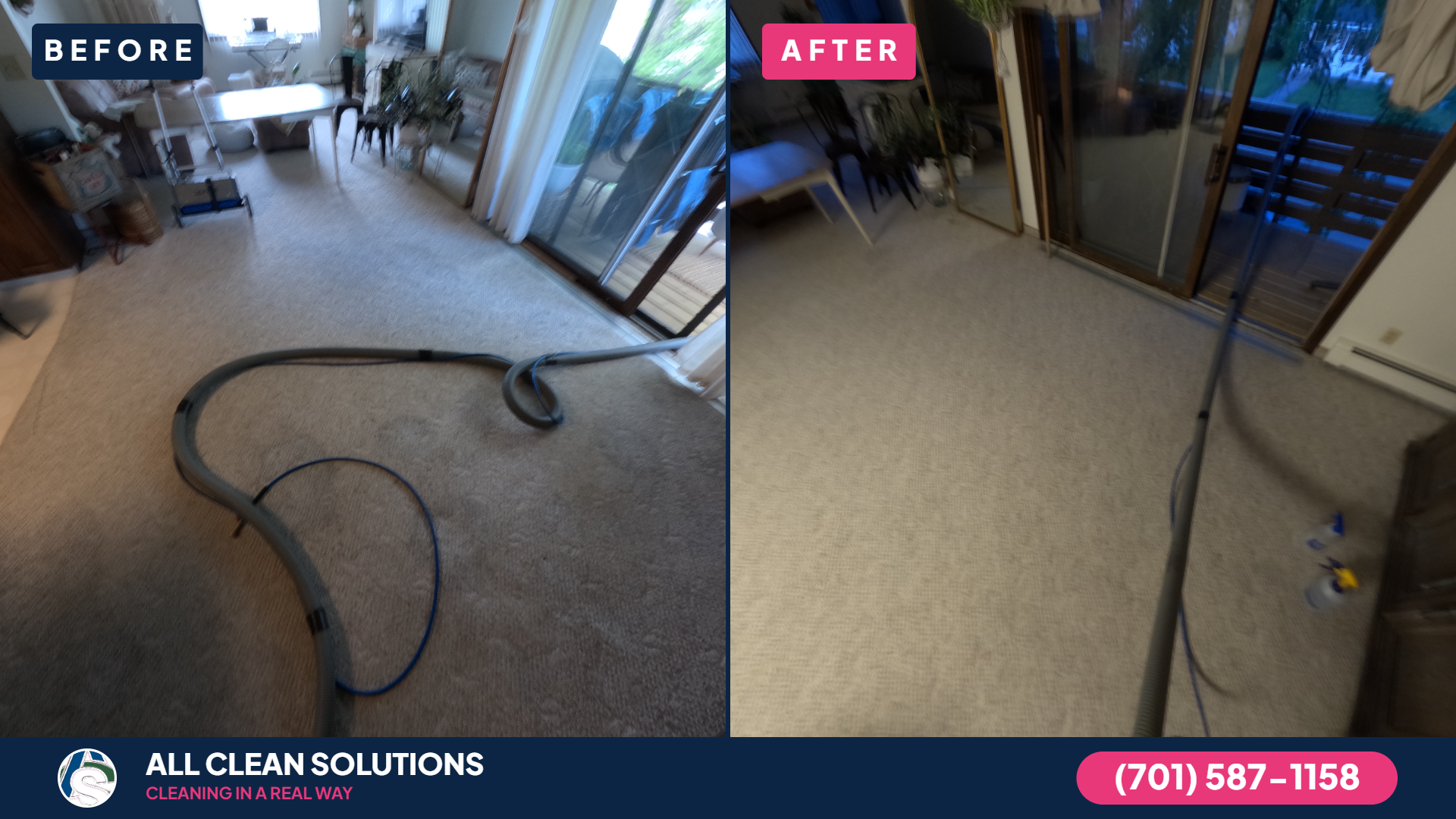
Professional cleaning should account for the fiber, colorfastness, the size of the affected area, prior treatments, and whether the issue appears limited to the surface. All Clean Solutions prefers hot-water extraction and may use prespray, mechanical agitation, a rinse agent, extraction, dry passes, and grooming as appropriate for the carpet.
Know when an entry needs a deeper reset
Consider an estimate when pale residue keeps returning, the carpet feels stiff or sticky, a damp odor remains, traffic lanes stay dark after vacuuming, or the affected area has spread beyond the mats. Describe whether the property is a home, apartment, office, church, store, or another commercial space because access and traffic affect the plan.
Typical carpet drying is often about two to four hours, but winter conditions inside the building still matter. Humidity, room temperature, airflow, carpet construction, and the cleaning scope can extend that time. Use fans or the building’s air system when appropriate, and limit traffic until the carpet is dry.
Build a repeatable winter routine
A practical routine is simple: maintain the mats, vacuum dry grit, blot fresh moisture, document unusual spills, and schedule deeper cleaning based on condition rather than a calendar copied from another property. No cleaning process can guarantee removal of every stain or odor, especially after repeated exposure or prior treatments.
Learn about professional carpet cleaning in Bismarck and Mandan, including residential and commercial estimates for winter-affected areas.