
What's included
Why it matters
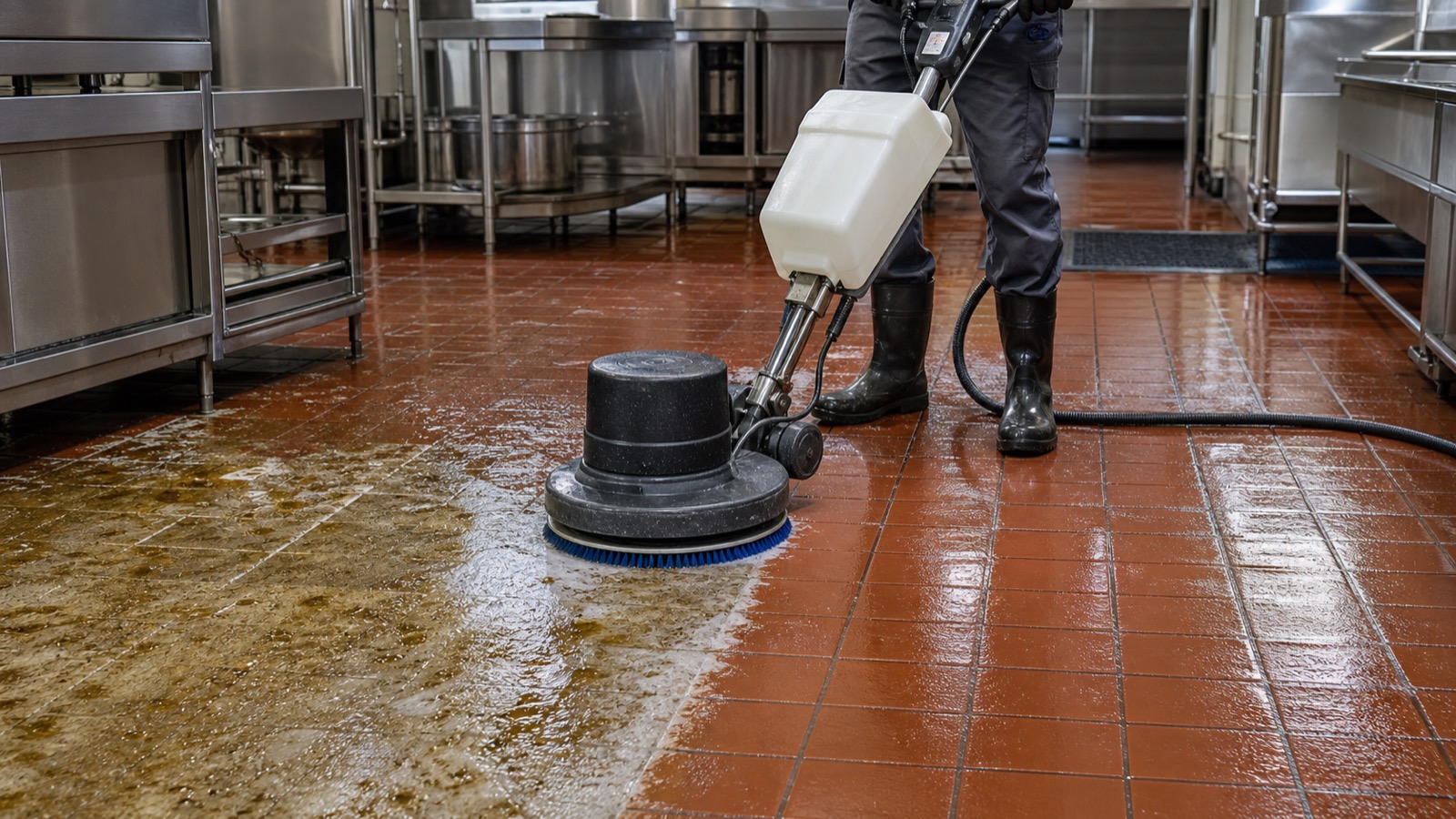
Grease buildup can increase slip and sanitation concerns and make a work area harder to maintain. The appropriate method and schedule depend on the surface, equipment, drainage, facility rules, and amount of buildup.
Our process
Grease assessment
We evaluate buildup thickness, surface types, and drainage to determine appropriate degreasers and pressure settings.
Surface protection
Electrical panels, equipment intakes, and adjacent areas are masked and protected before work begins.
Degreaser application
A compatible commercial degreaser is applied to the surfaces included in the scope and given appropriate dwell time.
Hot-water cleaning
Hot-water pressure washing or another suitable method is used where the surface, equipment, drainage, and facility rules allow it. Heavy buildup may need additional passes.
Rinse and review
Wastewater handling and rinsing are planned around the property, drains, local requirements, and quoted scope before the cleaned areas are reviewed.
Frequently asked questions
How often do commercial kitchens need professional degreasing?
There is no single interval for every kitchen. Cooking volume, surface condition, spills, drainage, routine cleaning, and facility requirements determine when a dedicated degreasing service is useful.
Is the degreaser suitable for food-service environments?
Product and method selection are based on the surface, facility rules, manufacturer directions, and requested scope. Food, utensils, and sensitive equipment must be protected or removed, and cleaned surfaces are handled according to the selected product directions.
Can you degrease warehouse and manufacturing floors?
Warehouse and manufacturing-floor requests are considered after we review the floor material, contamination, drainage, equipment, access, facility rules, and safe cleaning method.