
The short answer: a curb ramp needs a named route and a no-pile note
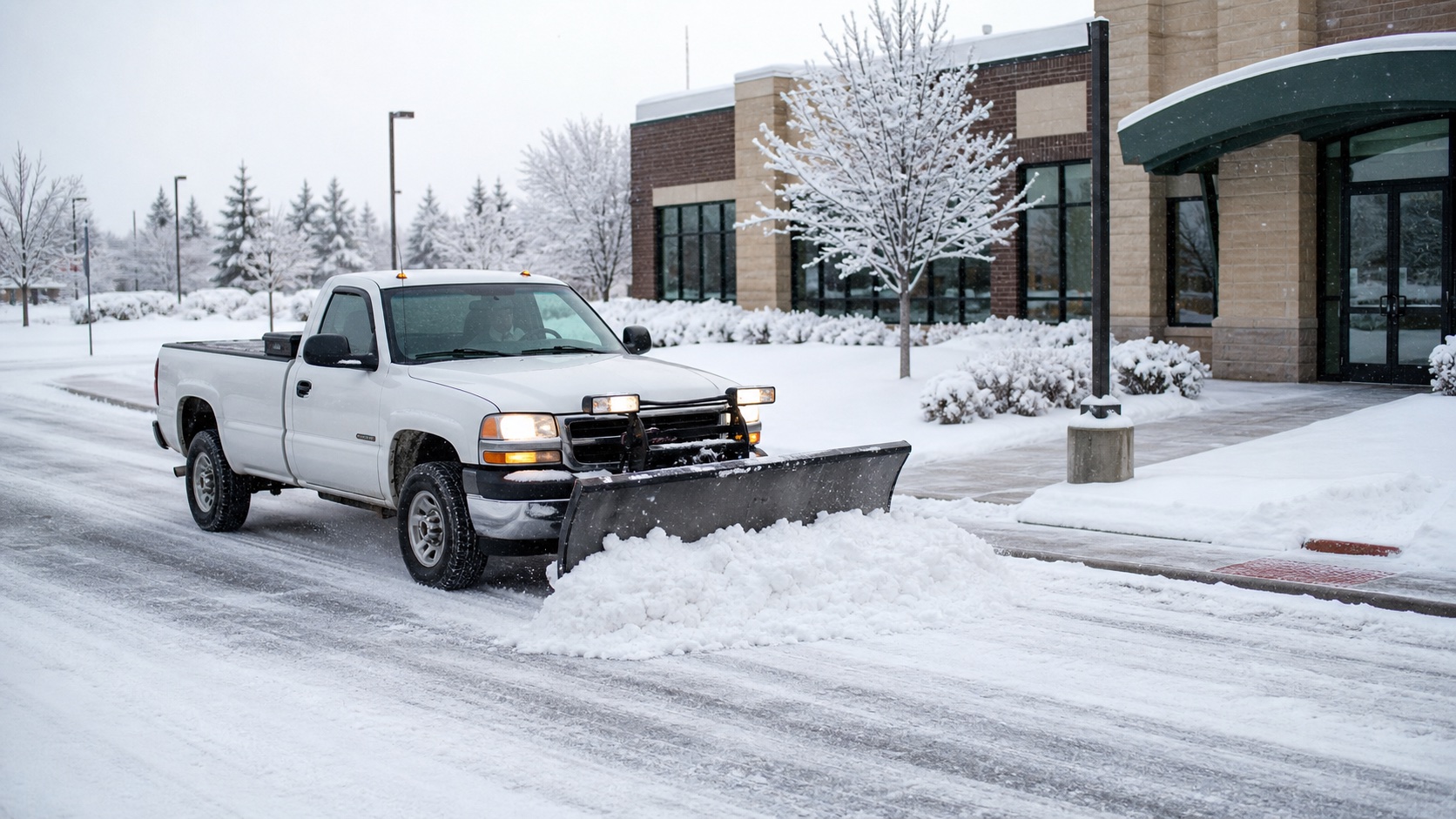
A curb ramp can be easy to miss in a snow plan because it is small compared with a parking lot, driveway, sidewalk, or entrance. But snow, windrows, slush, refreeze, parked vehicles, and a pile at the edge of a lot can change the route between a parking area and a building even after the main plowing is complete.
For a Bismarck-Mandan property, the useful first step is to name the ramp, the connecting walk, the nearby access aisle or parking edge, and the private surfaces included in the snow-service request. That does not make every curb ramp an automatic All Clean Solutions service area or turn winter service into an accessibility inspection. It gives the property contact and the estimate a clear way to describe which areas need review.
Follow the route on both sides of the curb ramp
Do not treat the sloped section by itself as the whole job. Walk the route from the parking or drive area to the ramp, across the ramp, and onward to the entrance or connecting walk. Note the top and bottom transition, the adjacent sidewalk, access aisle, curb line, door route, drains, signs, wheel stops, parked vehicles, and areas where snow could be pushed or stored.
The U.S. Access Board explains that curb ramps are part of accessible routes and that curb ramps should not project into parking spaces, access aisles, or vehicle traffic lanes. Its guidance addresses design requirements, not an All Clean Solutions promise that a property complies with them. The property owner or manager should confirm its own accessibility, building, and site duties with the appropriate authority.
For snow planning, the practical question is: which private path must remain clear enough to review when conditions change, and where must snow not be placed?
Keep plowed snow and windrows out of the usable approach
The nearest open edge is not always a workable place to stack snow. A pile can narrow the approach, cover the ramp transition, reduce visibility, block an adjacent route, or send thawing water back across the path. A municipal plow pass, drifting, or traffic can also change the curb-side condition after private-property work has been completed.
Add the curb ramp to the same site notes used for main entrances, fire exits, drains, hydrants, loading areas, and other no-pile zones. The note can identify:
- The curb ramp and the connected sidewalk or entrance route
- The side of the drive or lot where snow must not be pushed or stacked
- Nearby vehicles, signs, wheel stops, drainage features, gates, or delivery activity
- Whether clearing, salt or sand, a return pass, or a separate review is included in the approved scope
- Who reports a changed condition and who can approve added work
This is planning, not a guarantee of bare pavement or uninterrupted access in every storm. Wind, new accumulation, thawing, refreeze, road conditions, and the approved scope still affect what can be done and when.
Separate public sidewalks from the approved private-property scope
Private service scope should be specific. A property may ask All Clean Solutions to review a privately owned entrance route, parking area, driveway, sidewalk, or curb-ramp approach, while public streets, city operations, and unapproved neighboring surfaces remain separate.
The City of Bismarck says property owners must remove snow and ice from sidewalks within 24 hours after snowfall, and its Engineering Department oversees work involving sidewalks, driveway aprons, and curb ramps. That city guidance does not define an All Clean Solutions estimate or transfer the property owner's obligations. It is a reason to identify the boundary, report a changing condition promptly, and avoid assuming that snow can be pushed into a street or another unapproved area.
If a city plow leaves a windrow near the route, or a pile is now affecting the ramp approach, document the exact location and when it changed. Wide photos that show the curb ramp, the connected walk, nearby snow, and the larger parking or street context are more useful than a close photo of snow alone.
Send the details that make the request reviewable
Before requesting a new snow plan or an update, provide the address, the curb-ramp location, the connected route, operating hours, known drainage or refreeze areas, photos, parking patterns, and places where snow cannot be stored. If access is blocked by vehicles, delivery activity, a locked gate, or active traffic, say whether a return pass is already included or needs approval.
For property-specific snow-removal planning, All Clean Solutions can review private driveways, parking areas, sidewalks, entrances, accessible routes, salt or sand, snow stacking, and quoted hauling for Bismarck-Mandan properties. The confirmed estimate should state the included areas, access limits, snow-placement rules, service trigger, and any detail work instead of promising code compliance, immediate dispatch, or conditions outside the approved scope.