
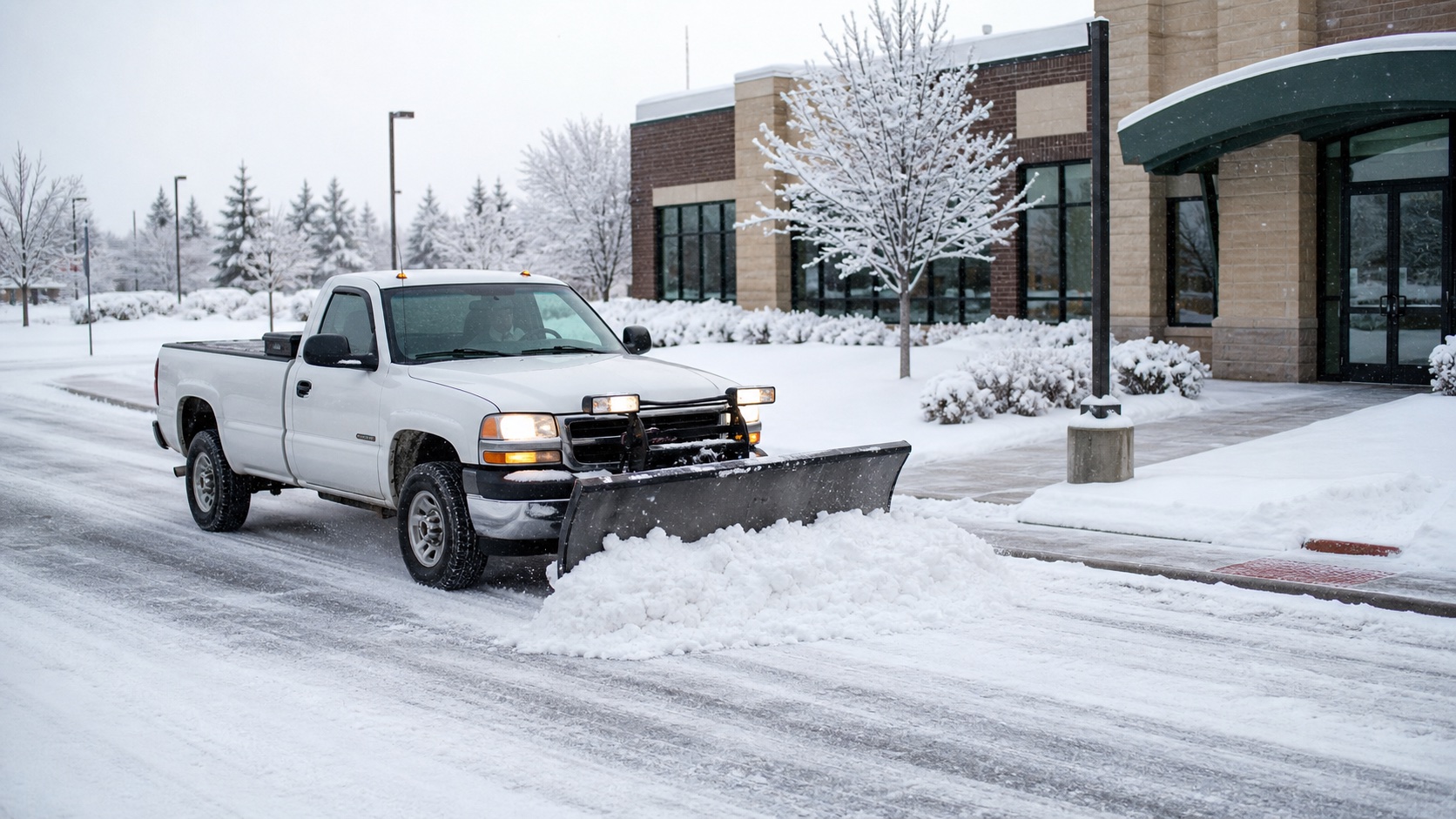
The short answer: an emergency exit needs its own winter access note, not an assumption
An emergency exit can be easy to overlook when a property is focused on a main entrance, parking area, driveway, or customer walkway. In winter, though, drifting snow, a pile placed near a door, packed snow at the threshold, ice on the outdoor approach, or a parked vehicle can change whether the route is usable.
For a Bismarck-Mandan home, rental, shop, office, restaurant, or other commercial property, the useful step is to identify each emergency exit and the route that continues away from the building before snow covers the pavement. That does not make every exit an automatic All Clean Solutions service area. It gives the property contact and the snow-service estimate a specific way to state which doors, walks, approaches, and no-pile zones are included.
Identify the full route, not only the door
An exit door is only the beginning of an outdoor route. Look at the landing or threshold, steps or ramp, sidewalk, gate, drive lane, gathering area, and the place occupants would reach after leaving the building. Note curbs, drains, railings, bollards, dumpsters, parking patterns, and equipment that can make the route harder to see or clear after accumulation.
For workplaces covered by OSHA exit-route requirements, the standard says an exit discharge must lead outside or to an area with access to the outside. It also addresses outdoor exit routes where snow or ice can accumulate. Those requirements are not an All Clean Solutions certification, inspection, or promise that a property will be risk-free. The employer or property owner should confirm its own code, fire, accessibility, and site obligations with the appropriate authority.
The snow-plan question is simpler: where must snow not be stored, and which private surfaces must be reviewed when conditions change? A marked map or site note is more useful than asking a crew to infer an unmarked rear door during a storm.
Mark a no-pile area around the exit and approach
The closest open edge beside a building is not always a safe snow-storage location. A pile can crowd a door swing, narrow the walking route, hide a step or curb, direct meltwater toward the entrance, reduce visibility, or leave less room for a later clearing pass.
Add the exit route to the same site notes used for main entrances, fire hydrants, loading areas, drains, drive lanes, and pedestrian paths. A practical note can identify:
- The door, landing, steps, ramp, and route beyond the exit
- Where snow may not be stacked or pushed
- Nearby gates, fences, curbs, railings, utility equipment, or parked vehicles
- Whether hand detail, salt or sand, a maintenance pass, or a return visit is part of the quoted scope
- Who should report a blocked route and who can authorize added work if conditions change
Wind, new accumulation, public plowing, traffic, thawing, and refreeze can change a route after a clearing visit. A no-pile note does not guarantee bare pavement or eliminate every winter condition. It helps prevent the avoidable problem of moving snow out of a parking area only to create a new obstruction at an emergency exit.
Keep city street work separate from private exit access
Public street operations and private-property snow removal have different responsibilities. The City of Bismarck explains that snow-plowing routes have their own priorities and that private snow may not be shoveled, blown, or pushed into the street. A city pass, drifting, or traffic can also change a private approach after a property has been serviced.
That means a property should not assume a later condition is automatically included in a private visit. If an emergency-exit approach changes, record the exact door or route, when the condition appeared, whether a street-plow pass or drifting occurred, and what has changed since the last service. Wide photos that show the door, approach, nearby snow pile, and adjacent route make a scope discussion more precise.
Separate the service scope from the property’s safety duties
Snow removal can include the private areas listed in an approved plan, such as parking areas, sidewalks, entrances, accessible routes, fire exits, or other quoted locations. It does not transfer the property’s responsibility for emergency planning, building maintenance, code compliance, employee training, or deciding whether a route is safe to use.
Before winter or before updating an existing plan, the property contact should provide the address, the emergency-exit locations, operating hours, priority routes, known drifting or drainage issues, photos of the full exterior approach, and any areas where snow cannot be placed. That lets the estimate identify what All Clean Solutions can review rather than relying on a generic “clear around the building” instruction.
For property-specific snow removal planning, All Clean Solutions can review private driveways, parking areas, sidewalks, entrances, accessible routes, fire exits, salt or sand, snow stacking, and quoted hauling for Bismarck-Mandan properties. The confirmed estimate should state the included areas, equipment access, snow-placement limits, service trigger, and any detail work instead of promising immediate dispatch, code compliance, or conditions outside the approved scope.