
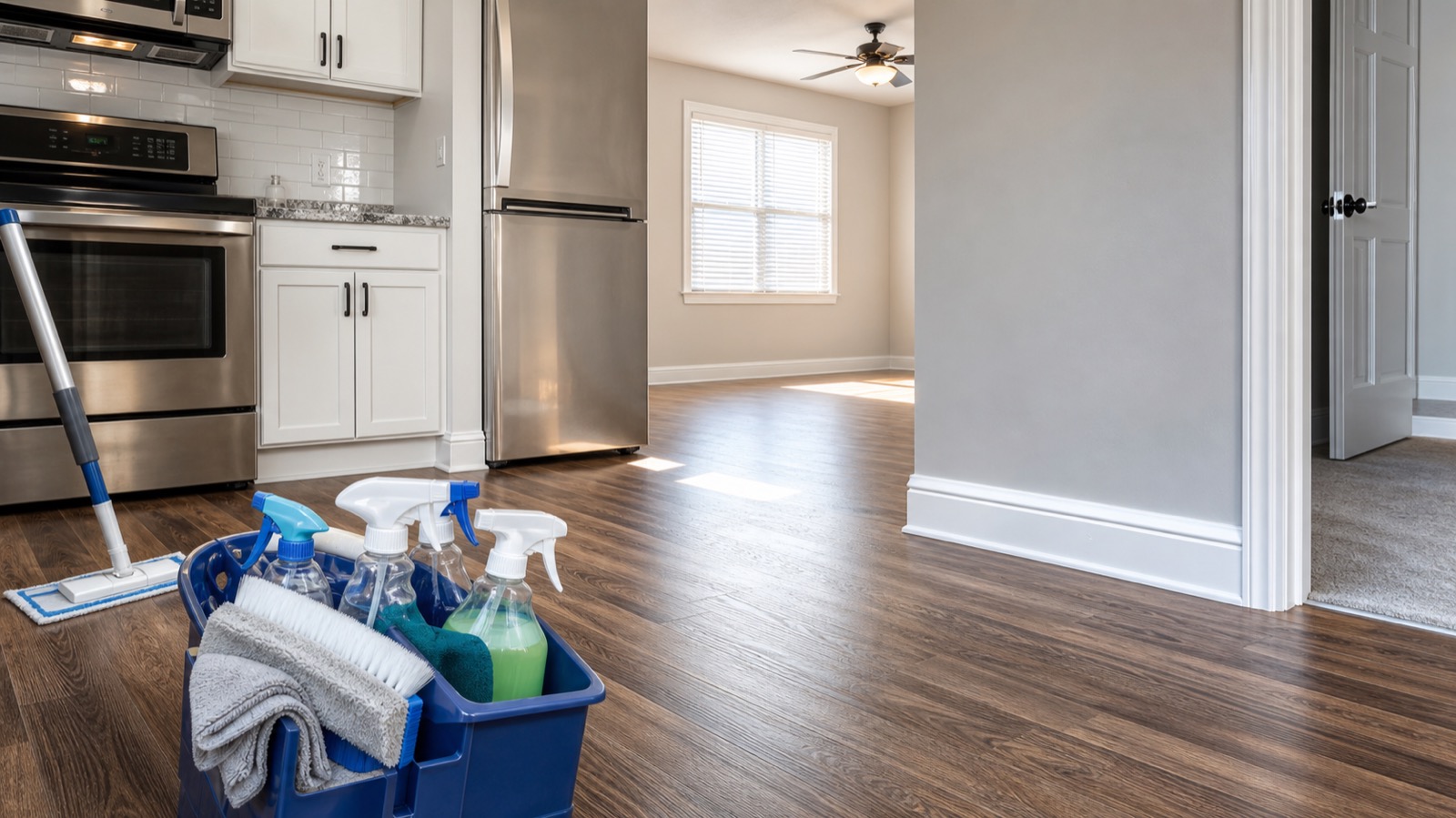
A business may need deep cleaning when its routine janitorial scope does not include the buildup, edges, reachable detail areas, cabinet interiors, grout, fixtures, or reset work now being requested. Deep cleaning is not simply “more of everything.” It is a separate, written scope built around the facility's condition, access, materials, and priorities.
Compare the request with the janitorial checklist
Routine janitorial work generally follows recurring tasks such as trash handling, restrooms, break rooms, vacuuming, sweeping, mopping, and selected reachable surfaces. The exact list varies by contract.
Deep cleaning becomes a separate conversation when the customer requests work outside that list: selected baseboards, door frames, switch plates, cabinet interiors, reachable vent covers, ceiling-corner dust, grout scrubbing, blinds, window tracks, or buildup in areas not addressed routinely.
Use condition—not a fixed calendar—to decide
There is no required quarterly or annual deep-cleaning schedule for every business. Traffic, operating hours, surface type, weather exposure, routine scope, spills, construction, staffing changes, and appearance expectations all affect when a reset may be useful.
A facility can review areas that remain dull, sticky, visibly dusty, or difficult for routine staff to maintain. Those observations help identify a targeted deep-cleaning scope rather than adding unnecessary work throughout the building.
Consider operational changes and special events
Moves, remodels, seasonal traffic, new tenants, large meetings, menu changes, equipment changes, and periods of unusually heavy use can create work outside the normal checklist. A deep clean may be planned before or after those events depending on access and the desired result.
If construction dust, heavy grease, carpet extraction, pressure washing, exterior windows, or another specialty service is involved, identify it during estimating. It may require a separate method, service, or contractor rather than being folded into an ordinary detail clean.
Build the reset by zone
Instead of describing the request as an unlimited top-to-bottom clean, divide the building into customer-facing, employee, restroom, food or break, floor, glass, and support areas. For each zone, record the surface, current condition, desired result, access window, and anything excluded. That turns a vague backlog into work that can be quoted and checked.
Possible tasks may include selected baseboards and edges, reachable vertical surfaces, fixture buildup, interior glass, accessible areas beneath light furniture, carpet cleaning, or hard-floor cleaning. These are examples, not automatic inclusions. Heavy or loaded furniture, fixed equipment, specialized remediation, and work assigned to another trade should be identified separately.
Plan access and protect operations
An occupied business may need rooms cleaned in phases. Confirm operating hours, restricted areas, alarms, keys, parking, noise limits, equipment shutdowns, customer traffic, and the person authorized to approve a change.
Light, practical items may be moved when requested and included in the quote. Heavy or loaded furniture, fixed equipment, and appliances remain in place. The estimate should explain whether the work will occur around those items.
Set realistic results and documentation
Surface condition, age, finish damage, prior products, staining, and inaccessible areas can limit the result. Deep cleaning does not repair materials or guarantee removal of every stain, odor, mark, or buildup.
When the customer is available, a walkthrough can compare the completed tasks with the written scope. Notes or photographs may be included when agreed during estimating, but they are not automatic and do not certify a health, regulatory, lease, or inspection standard.
After the reset, note which areas created the backlog. A missing recurring task, too little time in one zone, seasonal entry traffic, or a maintenance condition may explain why the problem returned. Adjust the ongoing checklist only where the property evidence supports it; a Bismarck office entry, a Mandan restaurant transition, and a church after a large event will not need the same recurring plan.
All Clean Solutions provides scope-based commercial deep cleaning in Bismarck and Mandan. Share the facility type, requested rooms, current condition, access window, and tasks outside the routine checklist for a free estimate.