
Mowing covers the open area, not every detail
The broad center of a lawn is usually the easiest part to mow. The places that catch the eye afterward are often the narrow areas the mower could not reach: beside a sidewalk, around a sign, under a fence, near a tree, along a building, or next to a landscape bed.
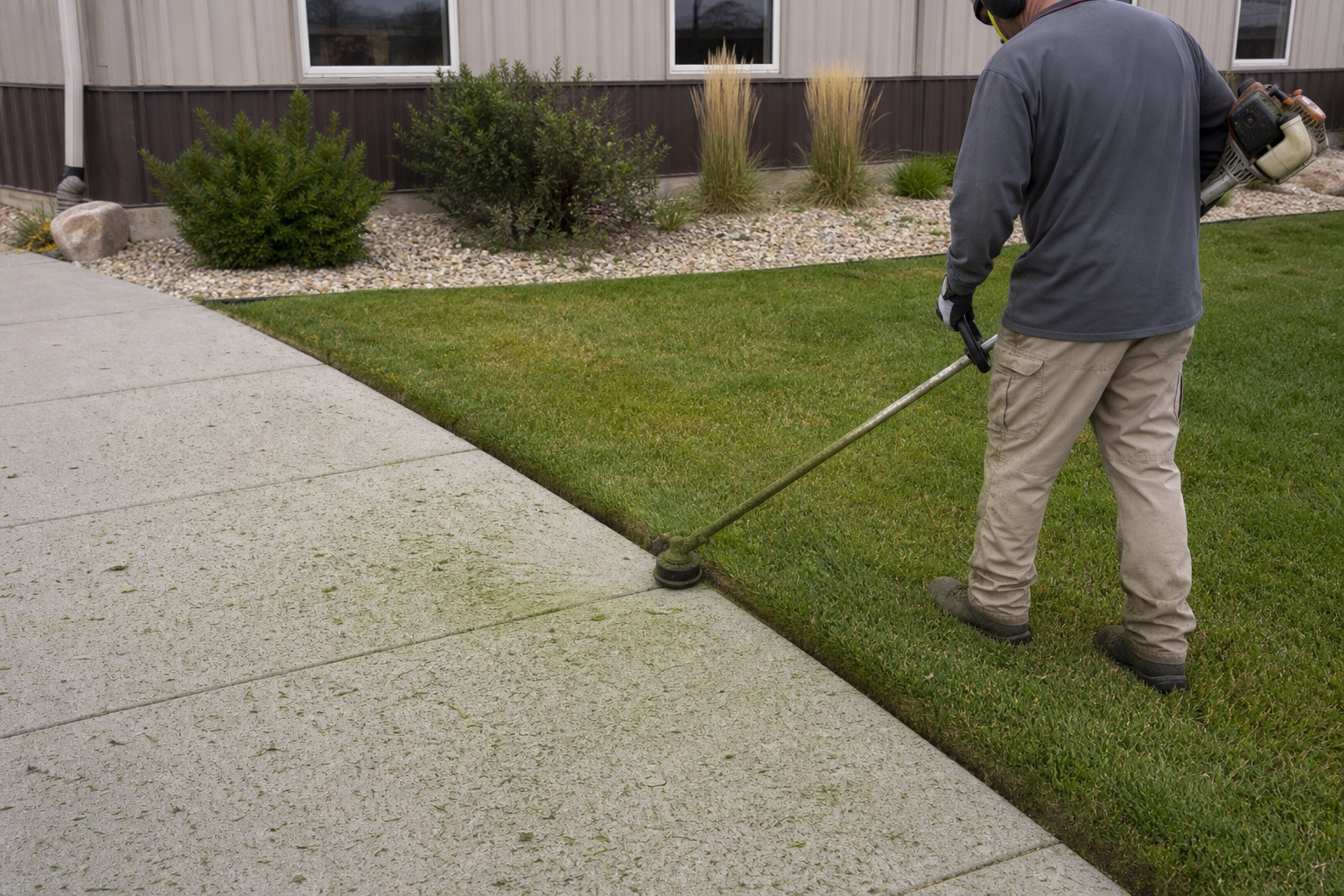
String trimming and edging address different details. Trimming cuts grass around obstacles and confined spaces. Edging defines the line where grass meets a sidewalk, curb, driveway, or bed. A property may need one, both, or neither in particular areas depending on its layout and the agreed service scope.
Straight edges make the whole lawn appear more deliberate
A clean boundary gives the viewer an easy line to follow. Even when a lawn has natural color variation or a few thin areas, a defined sidewalk or curb edge can make the maintained space appear more orderly.
That does not mean every edge should be cut aggressively. Repeatedly removing soil or cutting too deeply can widen the gap beside concrete. The goal is a controlled boundary appropriate for the property, not a trench.
Trimming requires care around objects
Fence fabric, young tree bark, siding, downspouts, signs, utility covers, irrigation components, and decorative borders can be damaged by careless contact. These areas should be approached according to the surface, available clearance, and equipment being used.
Loose gravel, mulch, trash, and small debris can also be thrown by trimming equipment. A quick condition check before work begins helps identify items that should be moved or avoided. People, vehicles, windows, and entrances near the work area also need to be considered.
Clippings during the work are normal
Edging and trimming can leave grass and soil particles on adjacent concrete while the work is happening. That does not automatically indicate a poor result. The important question is what the area looks like when the agreed visit is complete.
If hard-surface cleanup is included, sidewalks, entrances, and curb areas should be addressed after mowing and trimming. Photographs should show the final condition rather than presenting a mid-process image as a finished job.
Every property needs its own detail plan
A small storefront with two sidewalk edges has different needs from an apartment complex with long fence lines, multiple signs, play areas, and parking islands. The estimate should account for the actual amount of detail work instead of treating every acre or every mowing visit as equal.
Property managers can help by identifying boundaries, sensitive areas, pet zones, locked gates, irrigation parts, and anything that should not be trimmed. That information reduces confusion and helps the crew concentrate on the areas that matter.
Ask what is included before scheduling
When requesting an estimate from All Clean Solutions, ask whether the proposed scope includes mowing, string trimming, defined edging, and cleanup of hard surfaces. If only part of the property needs detailed work, describe those locations or provide photographs.
All Clean Solutions accepts lawn-care estimate requests for properties within approximately 50 miles of Bismarck. Service recommendations depend on the property condition, access, and requested scope. For a second planning angle, see how property layout and growth affect edging and trimming frequency.