
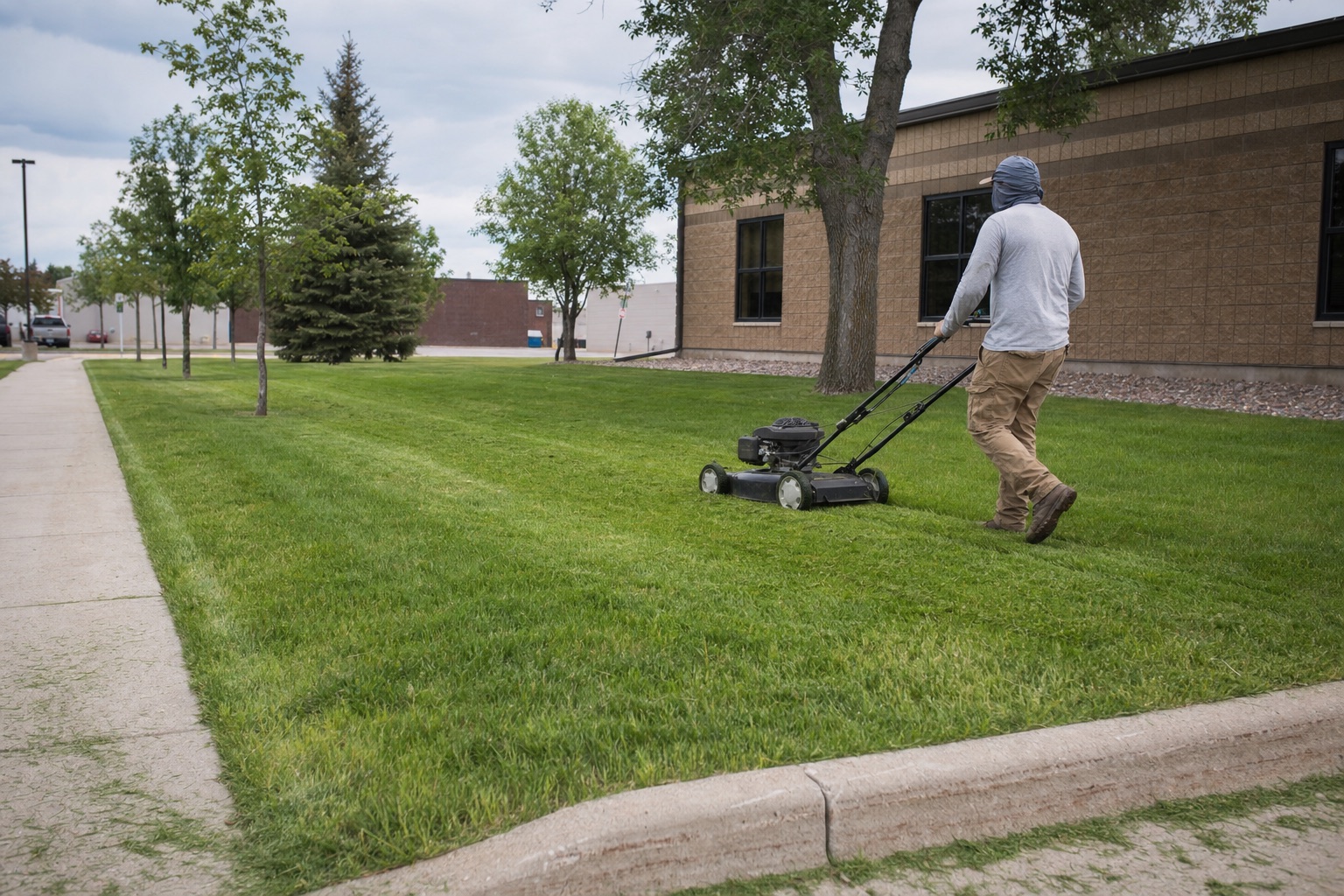
Start with a clearly defined mowing area
A useful commercial lawn plan identifies exactly which grass areas belong in the visit. Property lines are not always obvious around offices, apartment buildings, retail properties, churches, and shared lots. Maps, a walkthrough, or marked photographs can help show which front lawns, side strips, boulevard areas, drainage edges, and rear sections need attention.
The plan should also identify areas that should not be mowed. Newly seeded patches, wet low spots, decorative plantings, utility areas, and spaces maintained by another contractor need to be clear before work begins.
Mowing height should match the property and conditions
Cutting grass is not simply a matter of making every lawn as short as possible. Grass condition, recent rain, summer heat, shade, uneven ground, and how quickly the property grows can affect the practical cutting height.
Removing too much growth at one time can leave a lawn looking stressed or uneven. When grass has become unusually tall, the first visit may need a different approach from a normal recurring visit. That should be discussed during the estimate instead of promising that every property will look identical after one pass.
Trimming and hard-surface cleanup complete the visit
A mower cannot reach every fence line, signpost, tree, curb, utility box, building edge, or narrow strip. Those details may require string trimming when they are included in the agreed scope.
Grass clippings can also land on sidewalks, entrances, curbs, and parking surfaces while mowing and trimming are underway. The service scope should say whether those hard surfaces will be blown clear at the end of the visit. A property can be fully mowed and still look unfinished when the edges and walkways are ignored.
Obstacles affect the finished result
Parked vehicles, trailers, toys, hoses, loose trash, pet waste, temporary signs, and movable furniture can block equipment or create safety concerns. Property contacts should remove personal or movable items whenever practical before the scheduled visit.
Fixed obstacles should be identified during the quote. Slopes, drainage areas, narrow gates, retaining walls, exposed roots, and soft ground can change which equipment is appropriate and how long the work takes.
Decide how service changes will be handled
North Dakota weather does not always follow a mowing calendar. Heavy rain, saturated soil, storms, or unsafe conditions may require a schedule adjustment. Mowing a wet or soft area can leave ruts, clumps, or damage that would have been avoided by waiting.
A good plan explains who receives updates, how access issues are handled, and what happens when growth is heavier than expected. That communication is especially important for managed properties where the person requesting service may not be present during the visit.
Information that helps All Clean Solutions prepare an estimate
When requesting a lawn mowing estimate, provide the property address, approximate mowing area, preferred schedule, gate or access details, major obstacles, steep or wet areas, and whether trimming and hard-surface cleanup should be included. Photographs can help with an initial conversation, while a walkthrough may be more useful for larger or complicated properties.
All Clean Solutions accepts lawn-care estimate requests for properties within approximately 50 miles of Bismarck. The final scope and schedule are based on the actual property and the services agreed upon before work begins.