
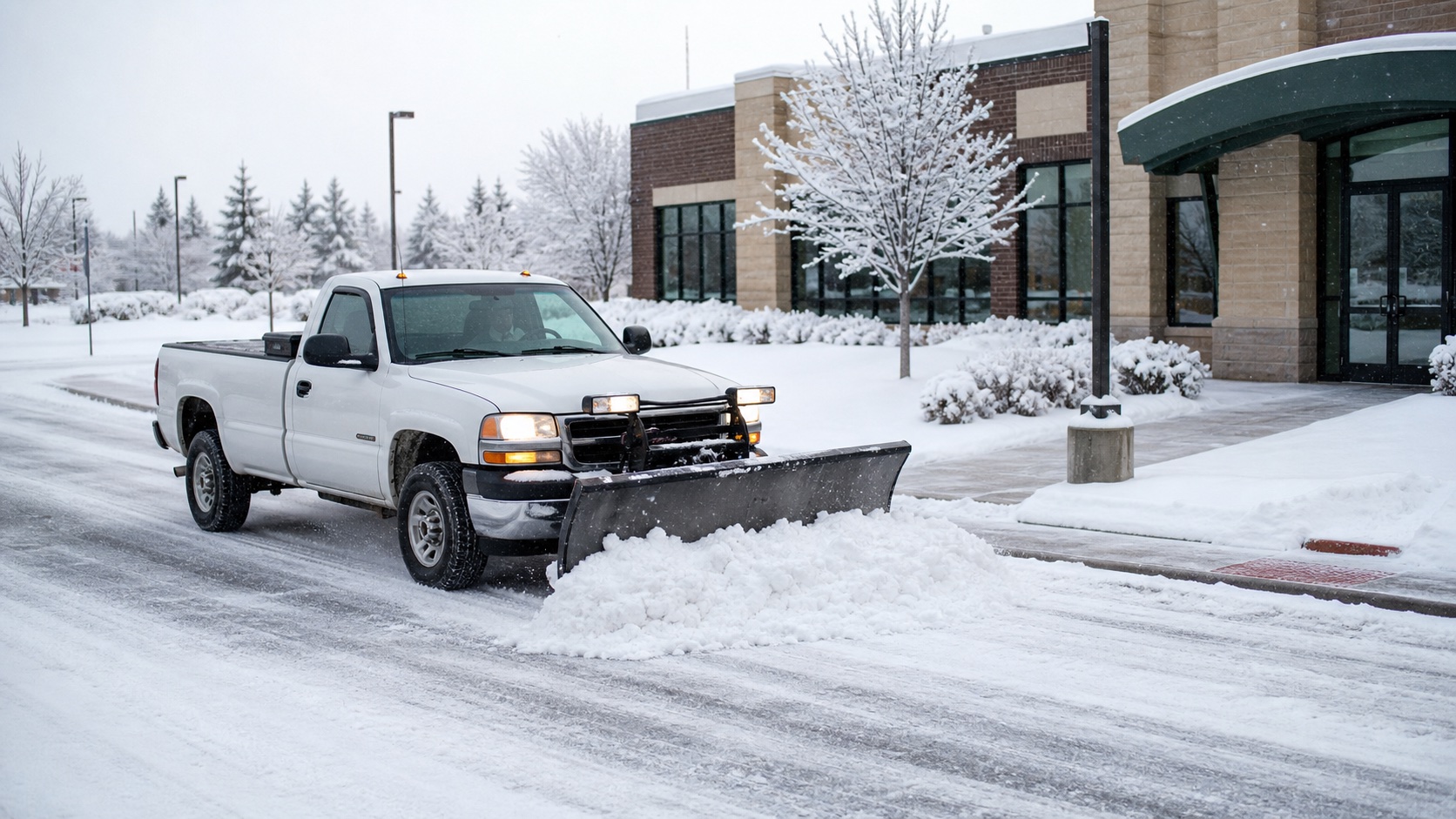
The short answer: map what is included before snow hides the property
A snow-removal scope map does not need to be a formal drawing. It needs to show which private areas should be cleared, which areas should be left alone, which entrances matter first, and where snow can be placed without creating a second problem. The best time to define those details is before the first storm, while curbs, edges, drains, parking blocks, and access routes are still easy to see.
For Bismarck, Mandan, Lincoln, and nearby North Dakota properties, a clear scope map can make an estimate more useful and reduce confusion once winter weather arrives. All Clean Solutions can review private-property snow-removal needs, but the final plan should still be based on the actual address, surfaces, access, obstacles, customer priorities, and approved quote.
List every area that should be cleared
Start with the obvious areas, then add the details that are easy to forget. A residential request may include the driveway, garage approach, front walk, steps, porch path, mailbox approach, and a path to trash or service access. A commercial request may include customer entrances, accessible routes, drive lanes, parking stalls, employee access, loading zones, dumpster access, and fire exits.
Naming the areas matters because different spaces may need different methods. Open pavement may be suitable for plowing. Narrow walks, steps, corners, and entrances may require shoveling or snow blowing. If the quote should include both large areas and detail work, the map should show that before the visit plan is built.
Mark excluded and limited-access zones
A good scope also says what is not included. Excluded areas may include tenant-only spaces, storage corners, grass edges, fragile landscaping, unapproved neighboring property, locked gates, equipment areas, or places where vehicles usually block access. If a section should be cleared only when open, that limit should be stated clearly.
This is especially important for properties with shared lots, rental units, loading areas, or changing vehicle patterns. If parked vehicles cover part of the lot during normal service windows, the plan should say whether that area is skipped, cleared later by separate approval, or handled only when vehicles are moved.
Choose priority routes before timing becomes urgent
Not every square foot has the same priority. A business may need the main customer entrance, accessible route, drive lane, and delivery path open before remote corners of a lot. A home may need the garage approach and front walk handled before a side path. The scope map should name those priorities in plain language.
Priority planning is not the same as a response-time guarantee. Visibility, road conditions, closures, route capacity, drifting, and safe travel can change dispatch timing during winter weather. Defining priority areas simply helps the estimate and service notes reflect what matters most when conditions allow work to proceed.
Pick stacking areas and no-pile areas
Snow placement belongs on the map too. Practical stacking areas should avoid entrances, accessible routes, hydrants, drains, mailboxes, dumpsters, loading access, sight lines, and places that need to stay open for later service. A pile that is fine after one light event can become a problem after repeated accumulation.
No-pile areas are just as important. If snow must not be pushed against a garage door, storefront, landscape bed, fence, sign base, utility cover, or neighboring property edge, identify that before the season starts. If the site has limited room, discuss whether snow hauling may need a separate quote rather than assuming all winter snow can stay on site.
Use photos or a simple marked screenshot
Photos are often enough for a preseason estimate when they show the full approach instead of only one close-up. Take wide photos from the street or lot entrance, then add closer photos of curbs, drains, steps, parking blocks, signs, low obstacles, gates, and likely stacking spots. A marked screenshot from a map can also help show entrances, lanes, and excluded zones.
If a property has several buildings, shared drives, or confusing access points, label them by use rather than by memory. For example: main customer entrance, employee door, delivery lane, north lot, west dumpster, tenant parking, or garage approach. That wording is easier to follow during a storm than a vague note like "clear the front."
What to send with a snow-removal request
A useful request includes the property address, property type, areas to clear, excluded areas, priority entrances, vehicle patterns, business or tenant access limits, obstacle photos, preferred stacking areas, no-pile areas, and whether salt, sand, or hauling should be reviewed as separate quoted items.
The All Clean Solutions snow-removal page explains how plowing, shoveling, salt or sand, and snow-hauling needs can be reviewed for Bismarck-area properties. If the property owner is coordinating winter service with lawn care, commercial cleaning, floor care, or other work, the main services page can help route the request to the right estimate. The confirmed scope, exclusions, timing limits, and winter conditions should be reviewed for the actual property before service begins.