
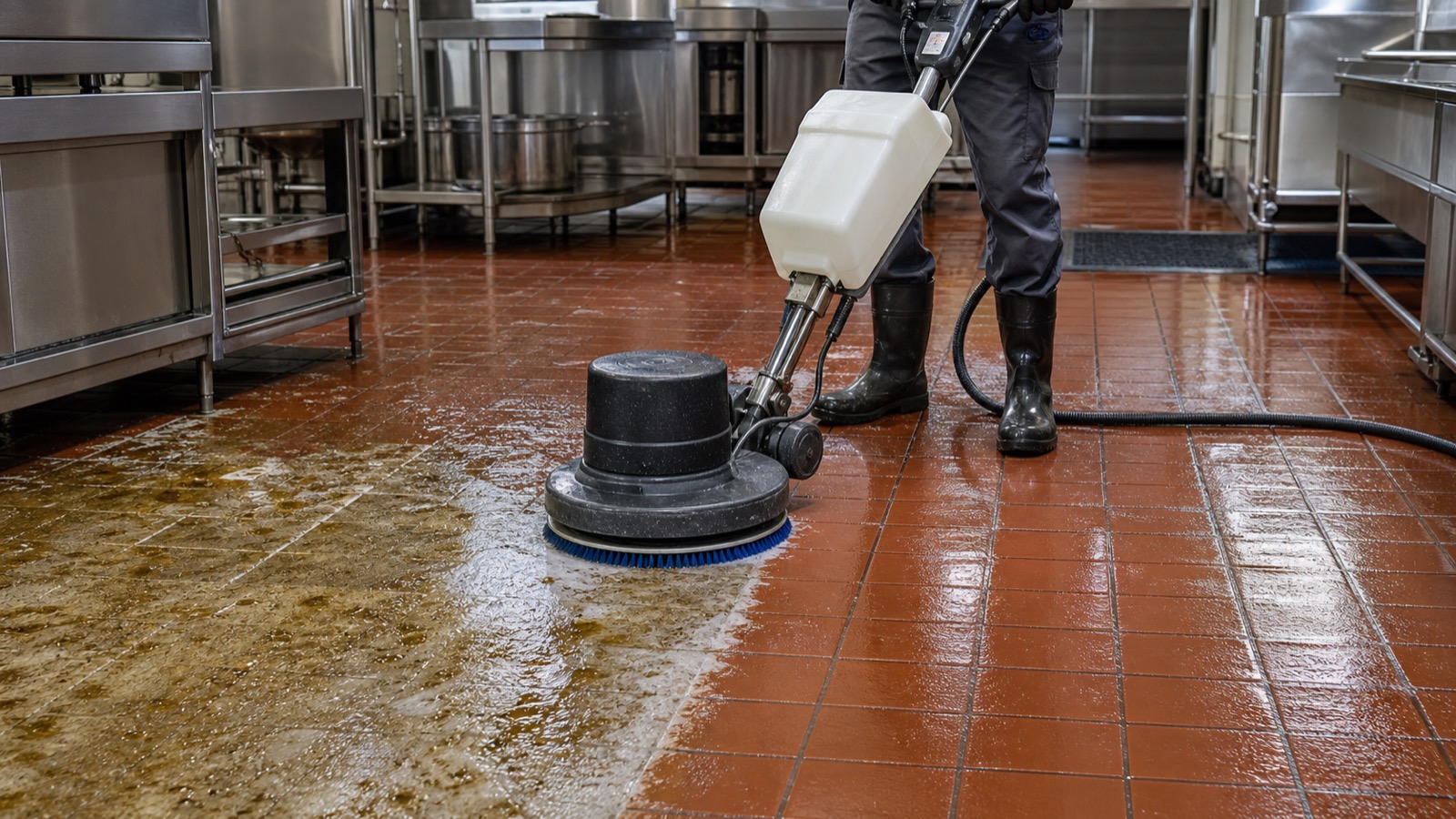
When a restaurant floor still feels greasy or looks cloudy after routine mopping, adding more of the same process may spread the problem instead of defining it. The next step is to identify the floor material and finish, find where the soil originates, and compare the open areas with edges, grout lines, equipment perimeters, and routes between the kitchen and dining area.
Grease can move farther than the cooking line
Cooking residue is not limited to the space directly below a hood. Shoes, carts, mats, and cleaning tools can transfer soil through prep areas, dish areas, service routes, and doorways. Different zones may contain different mixtures of grease, food residue, tracked-in grit, and cleaning-product buildup.
That is why a useful inspection follows the traffic pattern. If the dining floor looks cloudy only along the route from the kitchen, the plan may differ from a kitchen where textured tile and grout are affected throughout.
Routine mopping has practical limits
A mop solution becomes less effective as it collects soil. Reusing loaded water or a saturated mop can move residue from one section to another. Tight edges, grout depressions, worn texture, and areas under accessible equipment may also receive less agitation than the open floor.
This does not mean one particular product or machine will automatically solve the condition. A floor can have grease on the surface, residue from prior maintenance, worn finish, damaged grout, or permanent discoloration. Those conditions need to be distinguished before results are discussed.
Identify the surface before choosing a method
Restaurant floors may include quarry tile, ceramic tile and grout, sealed concrete, resilient flooring, or another finished surface. Each can have different limits for moisture, temperature, agitation, and cleaning products.
Before service, record:
- The floor material and finish, if known
- Cracked tiles, loose grout, open seams, worn coatings, or other damage
- The heaviest soil zones and the route connecting them
- Fixed and movable equipment around the affected area
- Drains, thresholds, transitions, and property-specific water restrictions
- The time available between closing, cleaning, drying, and reopening
The property remains responsible for identifying site rules, sensitive equipment, and runoff or drainage requirements that affect the work. Those details belong in the estimate rather than being assumed.
A deeper cleaning scope should be specific
Depending on the floor and quoted work, a process may include loose-soil pickup, compatible cleaning solution, controlled dwell time, mechanical agitation, recovery, and rinsing. The exact sequence should follow the surface condition and product directions.
Ask whether the scope includes grout lines, edges, beneath movable light items, mats, thresholds, dining areas, restrooms, or only the kitchen. Confirm who will move items and which heavy, loaded, connected, or fixed equipment will remain in place.
Cleaning should also be separated from repairs, stripping, refinishing, sealing, waxing, or coating work. A visibly improved surface is not a guarantee that every stain, worn area, or discoloration will disappear.
Use the result to improve routine maintenance
After deeper work, compare which areas collect residue first. That observation can help a restaurant decide whether mop water needs to be changed sooner, tools should be separated by zone, mat service needs adjustment, or certain edges require more detailed routine attention. The appropriate interval depends on cooking volume, floor texture, traffic, maintenance practices, and the condition observed—not a universal calendar.
All Clean Solutions provides case-specific restaurant and commercial floor cleaning estimates for properties within approximately 50 miles of Bismarck. Share photos, approximate square footage, floor type, operating hours, and the areas where residue returns so the proposed scope can address the actual problem.