
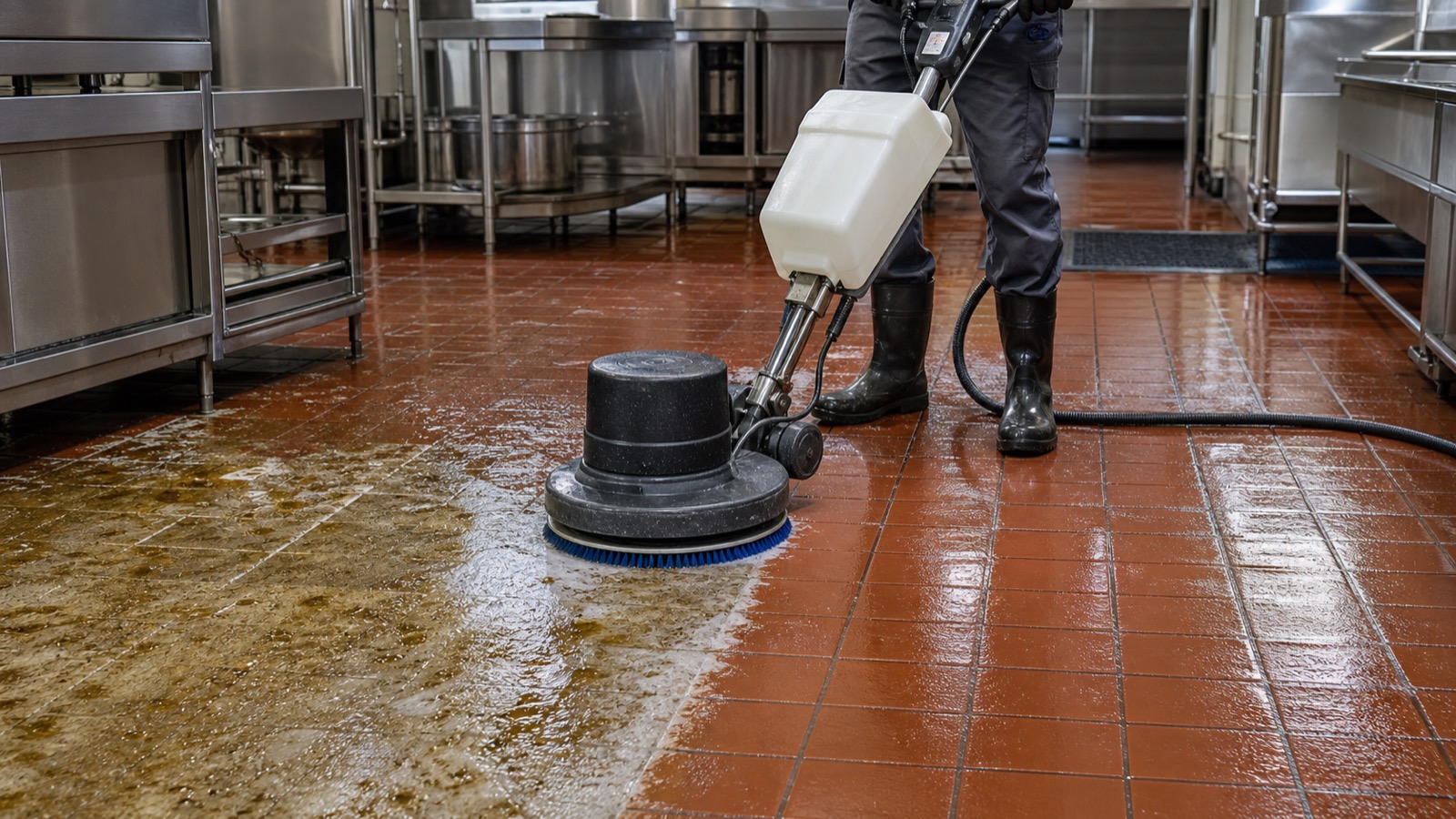
A shop floor can collect dry dust, tracked-in grit, rubber marks, oily residue, metal debris, and spills in the same room. Those materials do not respond the same way, and the concrete or coating beneath them may have its own limitations. A useful cleaning plan begins by identifying both the surface and the soil instead of selecting equipment from the square footage alone.
Start with the floor, coating, and damage
Shop floors may be bare concrete, sealed concrete, painted, coated, tiled, or divided among several surfaces. Ask the owner or manager what finish is present and whether product or maintenance records are available.
Walk the area and note cracks, spalling, worn coating, failed patches, open joints, drains, transitions, and previous stains. Cleaning can remove compatible surface soil, but it does not repair concrete, replace a coating, or guarantee that absorbed discoloration will disappear.
Map the soil by work zone
The soil near an overhead door may differ from the material around a workbench or service bay. Create a simple zone map:
- Entrances and vehicle paths: grit, mud, snow residue, or tire marks
- Work areas: process dust, residue, dropped material, or small spills
- Equipment perimeters: buildup in areas routine tools cannot reach
- Storage zones: compacted dust beneath accessible shelves or pallets
- Break or office transitions: soil transferred from the shop into finished rooms
Identify any material that requires the property’s own handling procedure or a specialized contractor. Unknown, hazardous, regulated, or actively leaking substances should not be folded into an ordinary cleaning estimate.
Decide what must move before service
Open access affects the method, time, and finished coverage. Determine whether vehicles, rolling carts, loose parts, cords, hoses, boxes, and light movable items will be cleared by the customer. Heavy, loaded, fixed, connected, or fragile equipment should remain in place unless a separate approved plan says otherwise.
Mark sensitive controls, outlets, stored products, floor openings, and areas that cannot receive moisture. Confirm which drains exist and what site-specific runoff or drainage requirements apply. The customer or property representative should provide those rules before the cleaning scope is finalized.
Match the process to the approved area
A quoted process may begin with suitable dry pickup so grit is not turned into slurry. Depending on the surface and soil, the next steps may involve compatible solution, controlled dwell time, agitation, recovery, and rinsing. Test areas can help determine how the floor and coating respond.
The estimate should state whether it includes open bays only, edges and corners, accessible equipment perimeters, restrooms, offices, storage areas, or entrances. It should also list exclusions such as coating removal, stripping, sealing, waxing, painting, repairs, hazardous-material response, or cleaning beneath inaccessible equipment.
Plan around operations, not only appearance
Shop cleaning often requires coordination with production, vehicle movement, deliveries, staff access, and the time available before an area returns to use. Break a large property into zones if full access cannot be provided at once. A phased plan can define what will be cleaned during each access window without promising a fixed completion time before the condition is reviewed.
Photographs, approximate dimensions, floor information, operating hours, and the heaviest-soil locations make an estimate more useful. Mention whether water access, recovery constraints, or property rules affect the work.
All Clean Solutions can review that information and prepare a case-specific shop and commercial floor-cleaning estimate for properties within approximately 50 miles of Bismarck. Method and results depend on the floor, coating, soil, damage, access, and approved scope.