
The short answer: sometimes, but the access plan matters
Winter floor cleaning may be possible while a business is open when the affected area can be separated from customer, employee, tenant, or resident traffic. It may need to happen before opening, after closing, by zone, or during a slower access window when wet floors, equipment, cords, mats, and drying time can be controlled.
For Bismarck, Mandan, Lincoln, and nearby North Dakota properties, the useful question is not only whether the floor looks dirty. It is whether the floor can be cleaned in a way that fits the surface, soil, traffic pattern, entry setup, building use, and realistic return-to-use needs.
Start with the route people still need to use
Before choosing a time, identify the route that must stay available. A retail store may need one customer entrance and checkout path. A church may need an accessible route and restroom path. An office may need an employee entrance, lobby, and hallway. An apartment property may need common walks, mail access, laundry access, or stair approaches.
Those active routes affect whether the work can happen in one visit or must be phased by zone. If the floor is cleaned across the only practical entrance while people are still entering, the service plan may create a bigger access problem than the winter residue it is trying to solve.
Wet work should not be planned like dry sweeping
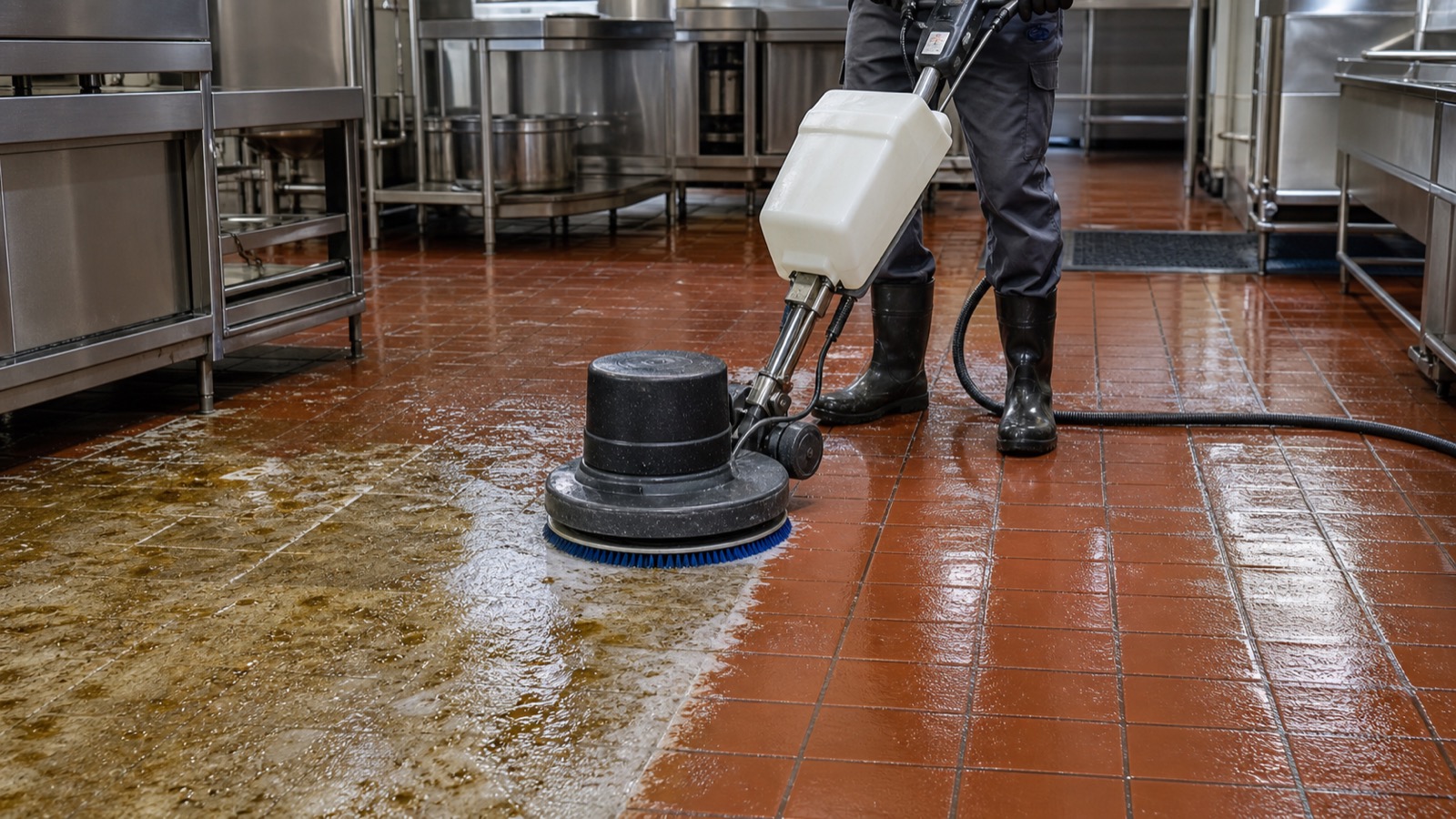
Winter floor cleaning often involves more than picking up loose grit. Depending on the surface and scope, it may include dry soil removal, compatible cleaner, controlled agitation, recovery, rinsing, or degreasing. Those steps can leave an area temporarily wet or unavailable.
The OSHA walking-working surfaces standard requires workplace walking surfaces to be kept clean and, to the extent feasible, dry. That does not make a floor-cleaning estimate a safety certification, but it explains why access, traffic control, drainage, mats, and drying limits belong in the planning conversation.
Watch contaminants, mats, and floor condition together
The CDC/NIOSH retail slip, trip, and fall prevention resource discusses prevention measures for walking surfaces and points to contaminants, flooring, housekeeping, and mat placement as part of the broader slip-and-trip conversation. In winter, those details often meet in the entry lane.
Salt residue, sand, slush, greasy soil, loaded mop water, curled mats, damaged transitions, worn finish, and cracked grout can all affect how the floor responds. Cleaning may improve reachable soil and residue, but it does not repair floor damage, guarantee dry conditions, or stop new winter soil from entering the building after the work is complete.
Decide whether the work can be phased
Some buildings can keep one route open while another section is cleaned. A lobby might be divided between two entry paths. A hallway might be handled in sections. A restaurant or shop may need floor work after closing because the affected area connects the kitchen, service route, restroom path, and customer area.
Phasing should be written into the plan, not guessed on site. The estimate should identify which rooms or zones are included, where people may walk while work is happening, which doors or aisles are unavailable, and when the customer expects the area to return to use.
Do not promise one universal drying time
Drying and return-to-use depend on the floor material, finish, product directions, soil load, amount of moisture used, recovery, ventilation, temperature, humidity, area size, and traffic limits. A small entry reset, compatible hard-floor cleaning, and commercial floor degreasing do not all have the same timing.
If the business needs the area open by a specific time, say that before the quote is confirmed. The answer may be a smaller first phase, a different access window, more preparation by the property, or a decision to wait until a longer closure is available. The plan should avoid a blanket promise that every surface will be ready by opening.
Separate floor cleaning from routine janitorial work
Routine mopping, entry mat care, vacuuming, and wet-floor response may belong to the normal janitorial routine. A floor-cleaning or degreasing project is different. It may require equipment staging, water access, power access, enough room to work, and time for the cleaned zone to settle before traffic returns.
That is why the All Clean Solutions floor-cleaning page should be used for commercial floor-cleaning and degreasing questions, while the commercial cleaning page can help separate recurring janitorial work from project-based floor care. Customers comparing floor care with snow removal, pressure washing, carpet cleaning, lawn care, or other property needs can also start from the main services page.
What to send before asking for winter floor cleaning
Before requesting a commercial floor-cleaning estimate, gather:
- The property address and best contact
- The floor area, room, entry, hallway, or traffic lane that needs attention
- Wide photos showing the route people use and close photos of residue, grit, mats, grout, transitions, or damage
- The floor type, finish, wax, coating, or recent maintenance history if known
- Normal business hours and the best window when the area can be controlled
- The route that must stay open for customers, employees, tenants, residents, deliveries, or restrooms
- Any alarm, lock, water, power, ventilation, parking, tenant, or access rules
- Whether the request is routine cleaning, winter entry reset, floor cleaning, degreasing, or a broader floor-care review
Winter floor cleaning works best when the access plan is as clear as the cleaning request. A quote should match the real property, the surface, the traffic route, and the amount of time the area can reasonably be kept out of use.