
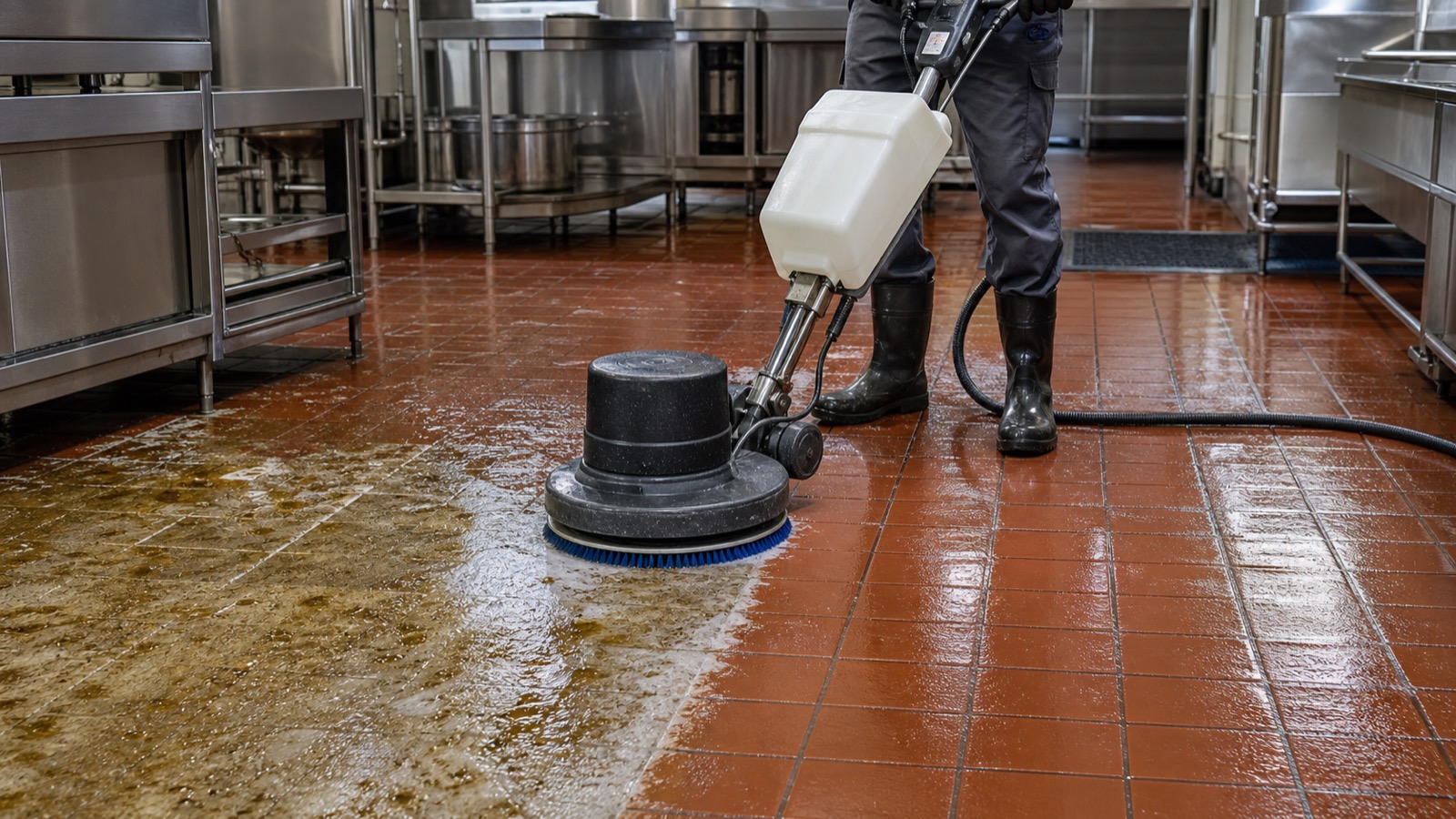
White haze, damp traffic lanes, and gritty residue near an entrance do not all call for the same cleaning method. Before choosing equipment or a cleaning solution, identify the floor material, its finish or coating, and the condition of the affected area. That first step helps avoid treating moisture-sensitive flooring like sealed concrete or treating a finished resilient floor like unfinished tile.
Why the residue keeps returning
Snow and slush carry moisture and fine material into a building. Foot traffic then spreads that mixture beyond the matting area. A quick mop can collect some of it while also moving dissolved residue into edges, grout lines, and nearby traffic lanes. If the cleaning solution or rinse water becomes loaded with soil, the floor may dry with a visible film.
A returning haze does not automatically mean the floor is permanently damaged. It may be residue on the surface, buildup from repeated cleaning, wear in the finish, or a combination of conditions. Those possibilities should be separated before anyone promises a result.
Identify the surface and finish
Start by confirming what is actually underfoot. Common commercial and residential entries may include tile and grout, luxury vinyl tile, sheet vinyl, sealed concrete, laminate, or finished wood. Each has different moisture, agitation, temperature, and product limitations.
Useful questions include:
- Is the floor sealed, coated, waxed, or otherwise finished?
- Are there loose tiles, open seams, worn areas, cracks, or damaged grout?
- Does the manufacturer provide care instructions?
- Is the white residue only near the door, or has it reached adjoining rooms?
- Does the floor look different when wet than after it dries?
Photographs of the overall area and close views of damaged or heavily affected sections can help define the condition before service. Photos document what is visible; they do not prove that every mark can be removed.
Control incoming moisture before deep cleaning
Cleaning lasts longer when the entry setup reduces new soil. Use enough matting for people to take several steps, replace or clean saturated mats, and remove standing slush before it spreads. Pick up loose grit with a method appropriate for the floor before adding more moisture.
During an active storm, repeated light maintenance may be more practical than one large cleanup while traffic is still bringing material inside. After conditions settle, the entry and connected traffic lanes can be evaluated for a more detailed reset.
What a professional scope should address
A floor-cleaning estimate should describe the floor type, approximate area, soil pattern, access, operating hours, and known damage. The proposed method may include dry-soil removal, an appropriate cleaning solution, controlled agitation, recovery, and rinsing when suitable for that surface and quoted scope.
Ask whether edges, grout lines, mats, thresholds, or adjoining traffic lanes are included. Also ask what will not be done. Sealing, waxing, stripping, refinishing, or repairing a damaged surface should never be assumed simply because the project is described as floor cleaning.
When to request an evaluation
Consider deeper service when routine cleaning leaves the same haze, grit remains embedded around texture or grout, or the affected zone continues expanding beyond the entrance. Share the property type, floor material if known, photographs, approximate square footage, and the times the area can be kept clear.
All Clean Solutions can review those details and build a case-specific floor-cleaning service scope for properties within approximately 50 miles of Bismarck. Results depend on the material, finish, existing wear, contamination, and access.