
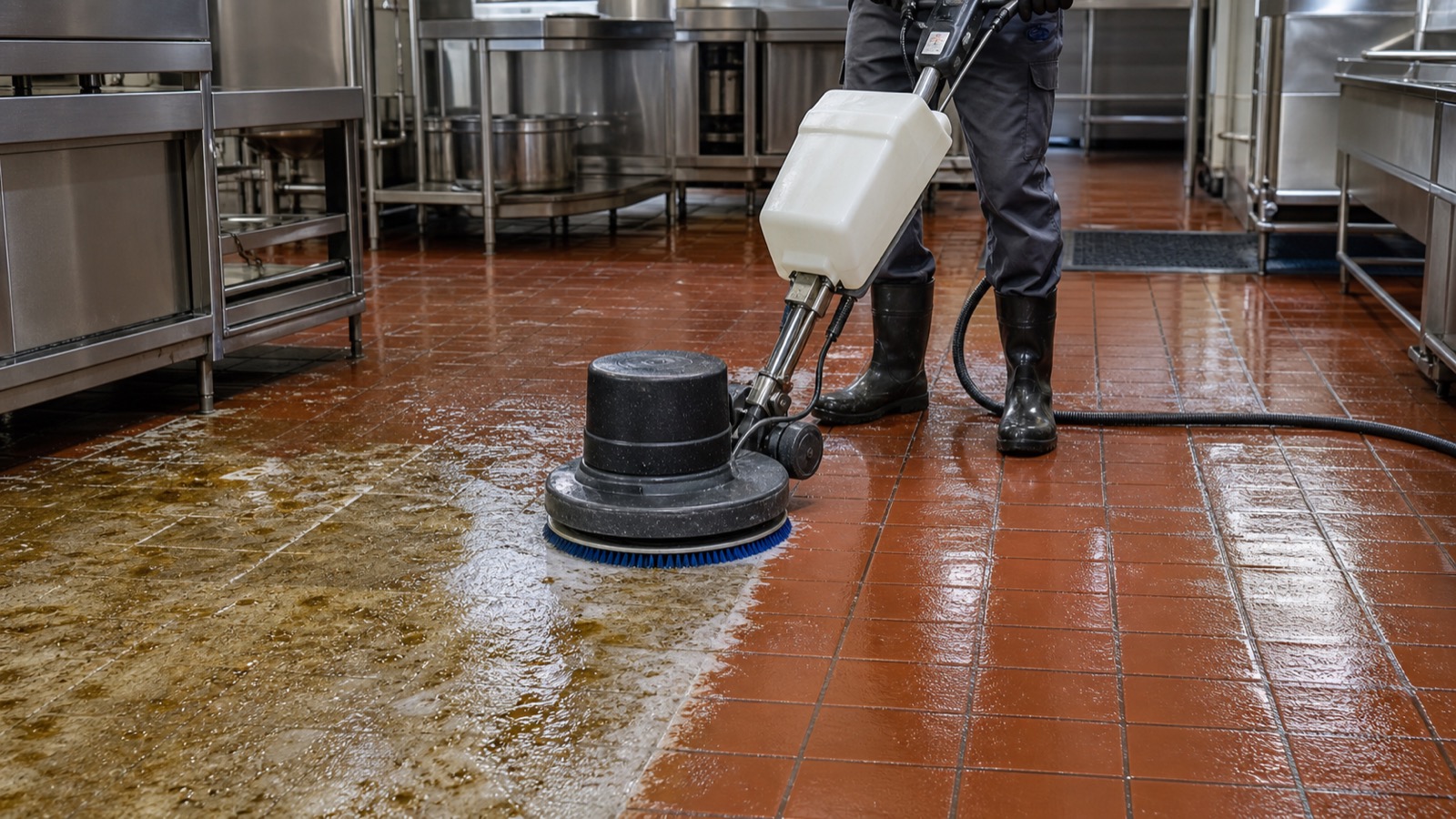
The short answer: winter residue keeps moving until the source is controlled
White haze, gritty traffic lanes, damp entry paths, and dull areas near mats can return after mopping because winter soil is not one single problem. Snow, slush, ice melt, sand, street grit, moisture, and foot traffic can keep carrying residue from the entrance into nearby floors.
For Bismarck, Mandan, Lincoln, and nearby North Dakota properties, the right floor-care plan starts with the actual surface, finish, traffic pattern, mat setup, moisture path, and maintenance routine. All Clean Solutions can review commercial floor-cleaning and degreasing requests, but the quoted method should be chosen after the affected floor is identified.
Start at the entry, not the mop bucket
Winter residue often begins before the floor-cleaning process starts. Mats may be too short for the route people actually walk, saturated mats may hold moisture against the floor, and loose grit can spread when traffic passes over it. If the entry system is overwhelmed, a fresh mop pass can look better for a short time and then dry with a new haze.
A useful review follows the path from the outside door to the first visible traffic lane. Look at the entrance, mat edges, vestibule, lobby, checkout lane, hallway turn, restroom approach, or kitchen route where people carry moisture and grit farther into the building.
Identify the floor and finish before choosing a method
Commercial entries may include tile and grout, resilient flooring, sheet flooring, sealed concrete, finished VCT, mats, or nearby carpet. Each surface responds differently to moisture, agitation, chemistry, heat, and recovery. A method that helps one floor can damage or disappoint on another.
Before asking for deeper service, note whether the floor has a finish or wax, visible wear, open seams, cracked grout, loose tiles, damaged edges, or areas that look different when wet than when dry. Those details help separate surface residue from worn finish, product buildup, existing damage, or embedded soil.
Remove dry grit before adding more moisture
Grit and sand can scratch finishes and settle into texture, grout, corners, and mat edges. If damp cleaning starts before loose material is removed, the residue can spread into a larger film.
The exact process depends on the floor, but the planning question is simple: what loose material needs to be collected first, and where does rinse water or dissolved residue need to go? Entries, thresholds, corners, floor drains, baseboards, and transitions should be discussed instead of treating the whole area as one flat surface.
Traffic lanes and edges need their own notes
A winter floor problem rarely stops in a perfect rectangle. Busy paths may stay dull while low-traffic corners look acceptable. Soil may collect along walls, under counters, around fixed fixtures, beside mats, or where people turn with wet shoes.
The estimate should say whether the request is for routine maintenance, a focused entry reset, edge detail, compatible hard-floor cleaning, commercial floor degreasing, or a broader floor-care review. Buffing, scrub-and-recoat work, stripping, finishing, sealing, repair, or replacement should not be assumed from the word "cleaning" unless the quote specifically includes that scope.
Plan around operating hours and drying limits
Winter floor work also has to fit the building. A restaurant, church, office, retail store, daycare, apartment common area, shop, or medical office may need different access windows and traffic controls. Some spaces can be cleaned by zone; others need a clear period after closing.
Drying and return-to-use depend on the surface, finish, method, soil load, ventilation, temperature, humidity, area size, and product directions. A realistic quote should avoid a universal return-to-traffic promise until the property and method are reviewed.
What to send before requesting winter floor help
Before requesting a commercial floor-cleaning estimate, gather:
- The property address and best contact
- The floor type if known, plus any finish or wax history
- Wide photos of the entrance, mats, traffic lanes, and affected rooms
- Close photos of haze, grit, edge buildup, grout, drains, or damaged areas
- Notes about when residue returns after mopping
- Normal business hours and the best access window
- Whether the request is routine maintenance, entry cleanup, floor cleaning, degreasing, or a broader floor-care review
The All Clean Solutions floor-cleaning page explains how commercial floor-cleaning and degreasing estimates are reviewed around the actual property. If winter residue is part of a larger janitorial concern, the commercial cleaning page can help separate routine cleaning from project-based floor work. Customers comparing floor care with other property services can also start from the main services page.