
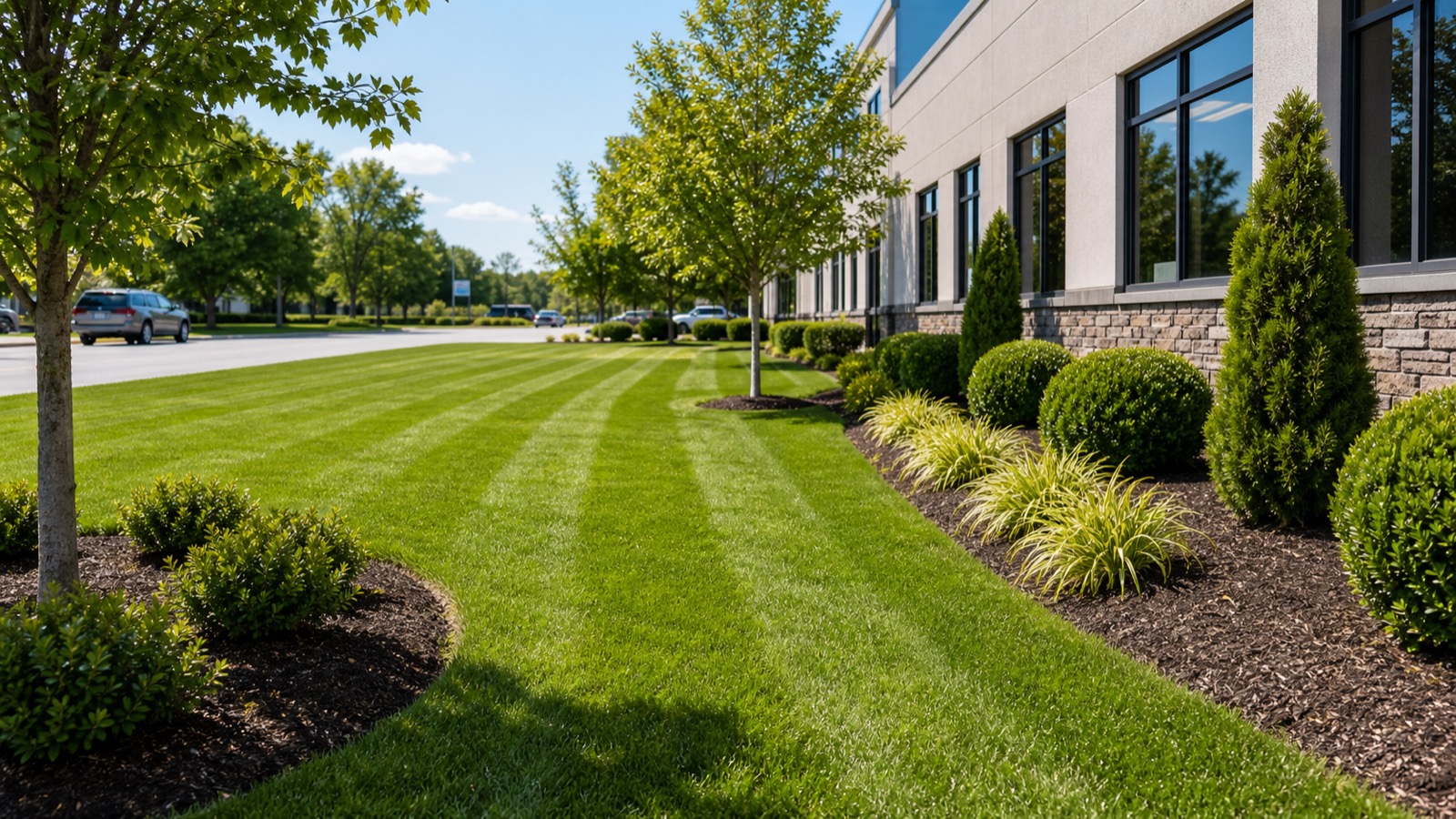
Yes. Mowing may need to change during hot, dry weather because grass often grows more slowly and can be stressed by cutting too short or removing too much at once. A calendar that fit fast spring growth may not fit a dry summer period.
North Dakota State University Extension recommends mowing established lawns 2.5 to 3.5 inches tall, cutting no more than one-third of the grass blade at a time, and mowing when the grass is dry. Those guidelines provide a useful starting point. The property still needs a decision based on its grass, actual growth, condition, and agreed service scope.
Look at growth before the scheduled visit
Different parts of one property can grow at different rates. Shaded areas, open sunny sections, low spots, and areas near buildings may not need the same attention at the same time. Photographs or a walkthrough can help distinguish active growth from a lawn that is largely holding its height.
A recurring schedule is useful for planning, but it should leave room to discuss weather and condition changes. Any visit adjustment still depends on the service agreement, route, and current availability.
Use height and the one-third rule to make the decision
NDSU's 2.5-to-3.5-inch range is especially useful during summer and low-maintenance conditions. Its one-third rule means a lawn maintained at 3 inches should generally be cut before it grows beyond about 4.5 inches. Mowing frequency should therefore follow growth instead of a fixed calendar alone.
Grass species, uneven growth, prior mowing height, and property preferences still matter. If the lawn has barely grown, the customer and provider can discuss moving or skipping a visit under the service agreement. If it has become overgrown, removing more than one-third in one pass is not the right shortcut; the first corrective visit may need a different height, additional passes, or separately quoted cleanup.
Consider dust, debris, and hard surfaces
Very dry lawns and exposed soil can produce dust while mowing or blowing. Mowing when grass is dry helps reduce clumping, but a brittle, dormant, or visibly stressed area may call for a condition discussion before equipment crosses it. Loose gravel, litter, branches, and other debris should be removed or identified before equipment enters the area. Vehicles, windows, entrances, and people near the work zone may also affect how blowing is handled.
If hard-surface cleanup is included, the quote should identify the sidewalks, entrances, curbs, or parking edges to be blown after mowing and trimming. Blowing moves loose clippings and debris; it does not replace pressure washing or detailed exterior cleaning.
Protect access to sensitive areas
Mark irrigation heads, hoses, exposed wiring, decorative edges, new seed, and areas that should not be mowed. All Clean Solutions does not install, start, repair, or adjust irrigation systems, but the crew needs to know where visible components and sensitive areas are located.
Keep gates accessible, remove toys and movable items, pick up pet waste, and tell the provider about construction or landscaping changes. A lawn that was open on the last visit may have new obstacles by midsummer.
Know what is and is not in the lawn service
During hot weather, customers may also be thinking about watering, weeds, fertilizer, aeration, or overseeding. Those services are not included in the current All Clean Solutions lawn scope. The company quotes mowing, trimming, edging, blowing, and seasonal leaf or debris cleanup.
For broader plant-health or irrigation advice, use NDSU Extension or consult an appropriate lawn or irrigation specialist. For help reviewing mowing frequency, accessible areas, and the finish requested from the current scope, see All Clean Solutions lawn care.
Revisit the plan when conditions change
A custom schedule can be adjusted through conversation, but changes are not automatic. Contact the provider when growth slows significantly, part of the lawn becomes inaccessible, debris accumulates, or the desired appearance changes. The revised plan should be confirmed before assuming a visit, skip, or added task.