
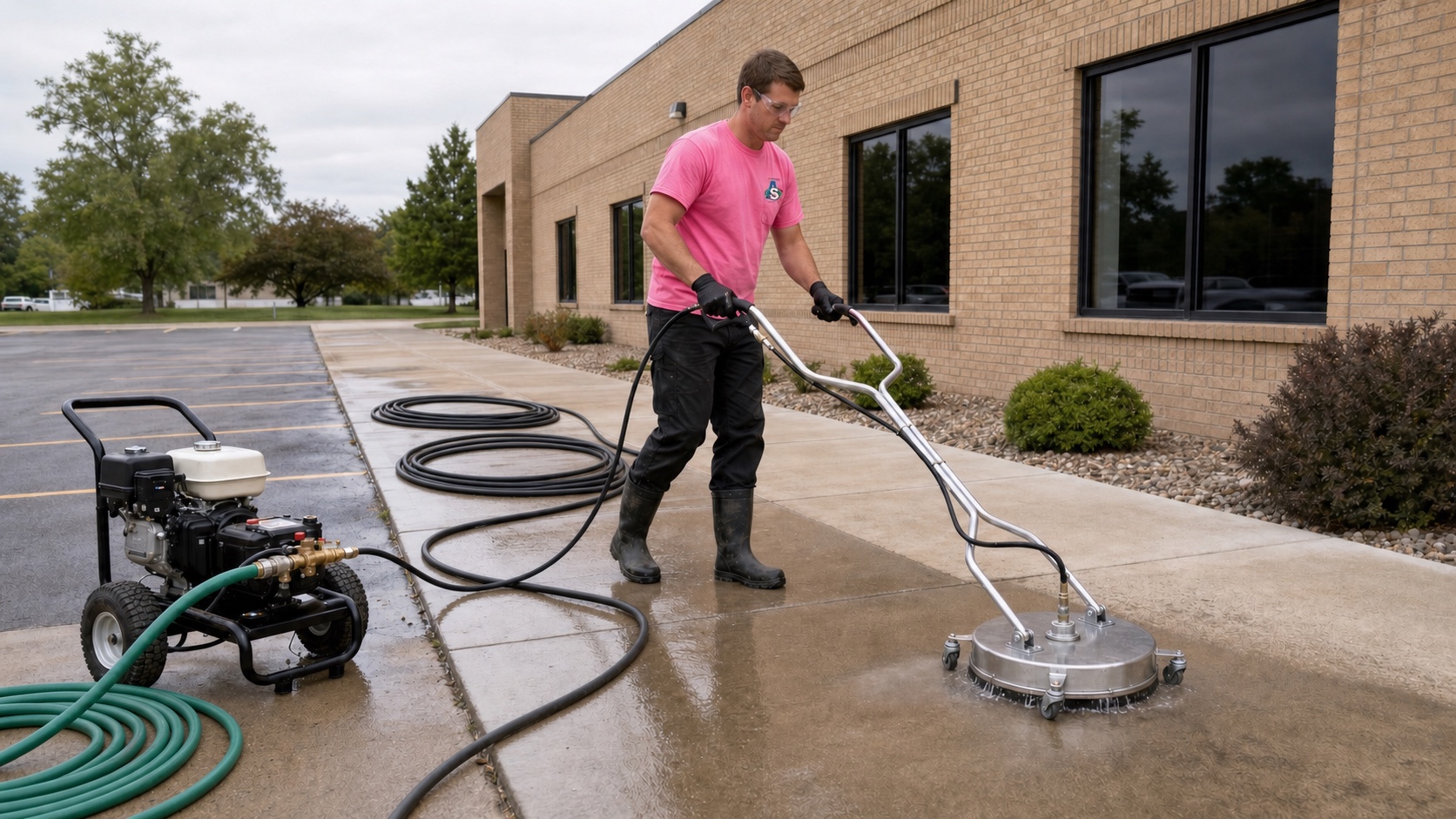
A concrete entrance can show white residue, dark traffic paths, grit, mud, and staining after repeated winter use. Before pressure washing begins, determine whether the visible condition is loose surface soil, deposits, worn sealer, scaling, previous damage, or a combination. Post-winter cleaning should focus on compatibility and control around the doorway—not simply applying the highest available pressure.
Separate residue from concrete deterioration
Inspect the entrance after loose material has been removed and the surface is dry when practical. White or uneven areas may be removable residue, but they can also reveal scaling, worn coating, patch variation, or damage that cleaning will not reverse.
Look closely for:
- Flaking, pitting, scaling, or loose aggregate
- Cracks, open joints, and damaged edges
- Patched or repaired sections
- Sealer, paint, coating, or decorative finish
- Rust-colored marks, oil, gum, or unknown stains
- Areas that stay damp or collect grit
Photograph the full entrance and each existing defect. A test area may help show how an appropriate method affects the surface, but it does not guarantee uniform results across concrete with different ages, repairs, or exposure.
Protect the building threshold
An entrance combines exterior concrete with doors, weather stripping, joints, glass, metal frames, mats, signage, electrical devices, and interior flooring. Identify gaps, damaged caulking, low vents, door sensors, outlets, and any location where water could enter.
Determine whether doors can stay closed, whether another entrance will remain available, and how pedestrian traffic will be redirected. Remove movable mats, planters, signs, and light furniture when practical. State whether steps, ramps, curbs, landings, or adjoining sidewalks belong in the quote.
Choose a method for the surface and residue
Pressure, water flow, temperature, nozzle, distance, movement, compatible products, and accessories all influence the result. Some open concrete may be suited to a surface-cleaning attachment, while edges, steps, textured sections, or damaged areas may require a different or reduced method.
Winter residue may respond differently from oil, rust-colored discoloration, gum, paint, or material absorbed into concrete. Ask what caused each stain and what prior treatments were attempted. Cleaning can address compatible surface soil; it cannot guarantee complete stain removal, restore lost sealer, or repair deterioration.
Wait for workable weather and surface conditions
Temperature, precipitation, wind, frozen ground, remaining snow piles, and the chance of refreeze can affect timing. Water should not be introduced when conditions make the work or resulting surface unsuitable. Scheduling remains case specific rather than tied to a particular calendar date.
Consider where snowmelt or cleaning water will travel. Entrance slope, joints, drains, low areas, landscaping, and nearby parking can redirect runoff toward the building or pedestrian routes.
Confirm runoff and property rules
The property representative should identify applicable landlord, facility, municipal, or site-specific requirements for water use, containment, drainage, and access. The estimate should define any agreed runoff-control or recovery steps and areas that remain excluded.
Do not assume every drain is an approved destination or that every residue can be handled under an ordinary pressure-washing scope. Unknown or regulated material may require a different provider or property procedure.
Prepare a focused entrance estimate
Share dimensions, wide and close photographs, surface and sealer information if known, operating hours, water access, soil history, drainage direction, and sensitive doorway conditions. A focused entrance scope should distinguish this seasonal residue project from a full-property walkway or exterior-cleaning job.
All Clean Solutions can evaluate those details and quote concrete entrance pressure washing for properties within approximately 50 miles of Bismarck. Method, timing, and results depend on the surface, damage, residue, weather, building access, runoff requirements, and approved scope.