
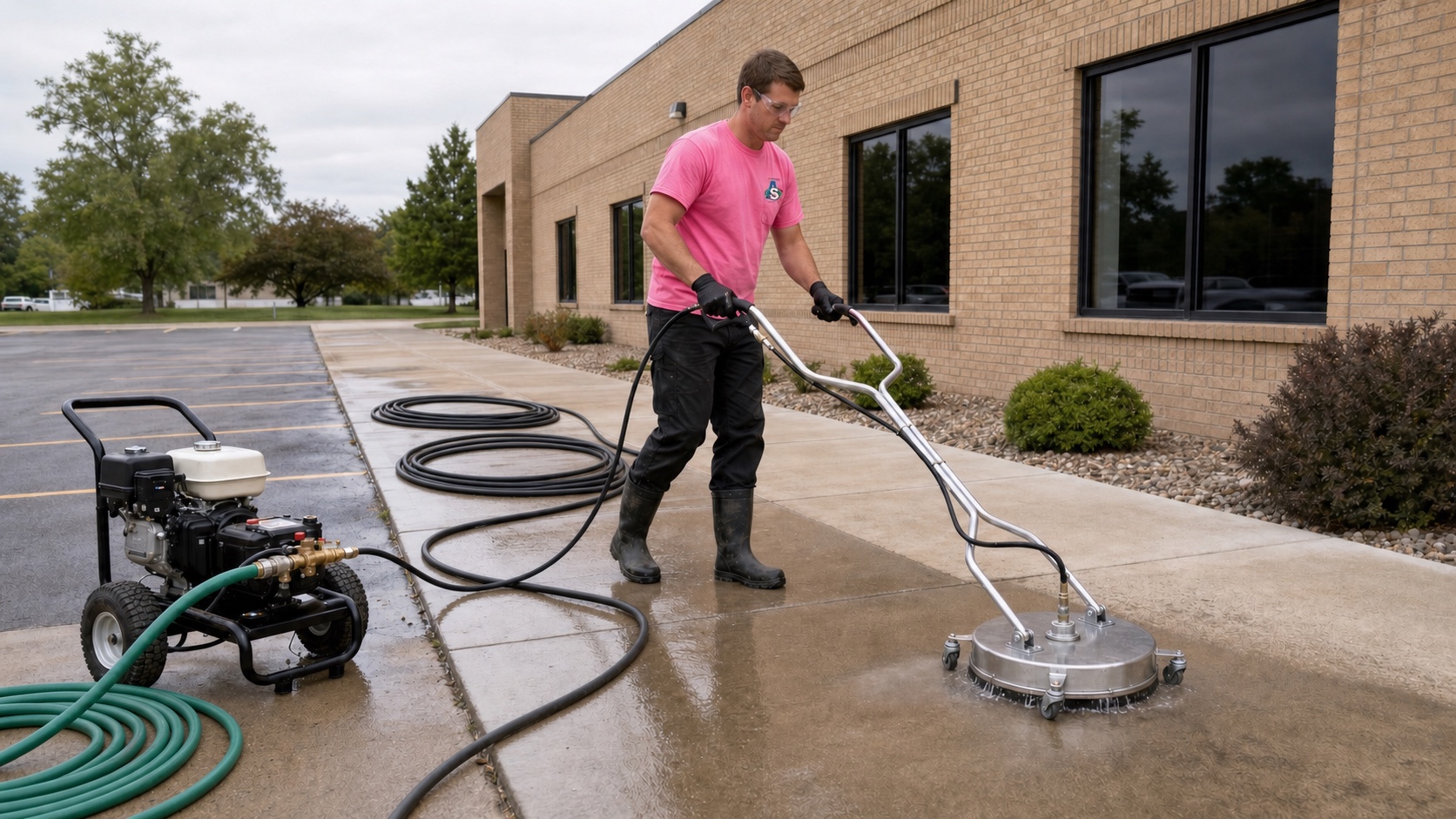
A restaurant or shop exterior often combines concrete, masonry, siding, doors, glass, painted metal, signs, loading areas, and waste enclosures. A single pressure setting is not appropriate for every surface. The estimate should divide the property into zones, identify the soil and sensitive features in each one, and coordinate the work with customers, employees, deliveries, and site requirements.
Walk the customer-facing route first
Begin where customers park or approach the property. List the entrance walkway, door area, facade, windows, outdoor seating, drive-up or pickup area, and any visible side surfaces. Then inspect service zones such as loading doors, employee entrances, delivery paths, and the waste enclosure.
Mark each area separately:
- Front walks, entry pads, steps, ramps, and curbs
- Masonry, siding, awnings, painted surfaces, and signs
- Doors, frames, windows, seals, vents, and electrical components
- Patios, seating areas, planters, and movable displays
- Loading zones, service doors, and delivery routes
- Dumpster pad or enclosure if separately included
This prevents an “exterior cleaning” quote from leaving the customer and contractor with different assumptions.
Match the method to each surface
Concrete, brick, mortar, stucco-like finishes, vinyl, metal, painted materials, wood, sealants, and coatings can have different pressure and product limitations. Inspect cracks, loose mortar, peeling paint, oxidation, failed caulking, damaged siding, and prior repairs.
Pressure, water flow, nozzle, distance, temperature, movement, accessories, and compatible products should be selected by surface. Lower-pressure or alternative methods may be appropriate in some areas. A small test location can help evaluate compatibility without guaranteeing identical results everywhere.
Identify restaurant and shop soil by source
Front entrances may collect dirt, gum, winter residue, and traffic marks. Restaurant service areas may have food or grease residue. Shops may have dust, rubber marks, oil, or material related to their work.
Ask what caused unusual stains, how long they have been present, and what was previously attempted. Unknown, absorbed, or deteriorated conditions may remain visible. Pressure washing cannot guarantee complete stain or odor removal and does not repair damaged surfaces.
Unknown chemicals, active leaks, sharps, biohazards, or regulated material should not be treated as ordinary exterior soil. The property must identify and arrange appropriate handling for material outside the approved cleaning scope.
Coordinate business access
Choose an access window based on operating hours, deliveries, employee arrivals, outdoor seating, customer traffic, and neighboring businesses. Decide which entrance must stay open and how pedestrians will be redirected.
The property should move light signs, mats, planters, furniture, carts, and displays when practical. Protect or identify cameras, alarms, outlets, lights, door sensors, low vents, damaged seals, and other sensitive features. Heavy, fixed, connected, loaded, or fragile items should not be assumed to move.
Define water, runoff, and site rules
Map slope, drains, low areas, landscaping, neighboring property, and building thresholds. The property representative should provide municipal, landlord, shopping-center, facility, or environmental requirements that apply to water use, containment, drainage, and access.
The quote should describe any agreed runoff-control or recovery work. It should not assume every drain is an approved destination or claim that one process satisfies requirements that have not been reviewed.
Prepare a zone-based estimate
Provide wide photos of each elevation and close photos of soil, damage, coatings, and sensitive areas. Include approximate dimensions, water access, business hours, delivery schedule, surface information if known, and the property’s written requirements.
Ask which zones are included now and which are optional. A customer-facing entrance reset, a service-area cleaning, and a dumpster-pad project can be separate scopes even when performed at the same property.
All Clean Solutions can review the checklist and quote commercial pressure washing for restaurants and shops in Bismarck, Mandan, Lincoln, and other communities within approximately 50 miles of Bismarck. Method, availability, and results depend on surface compatibility, soil, access, weather, runoff requirements, and the approved zones.