
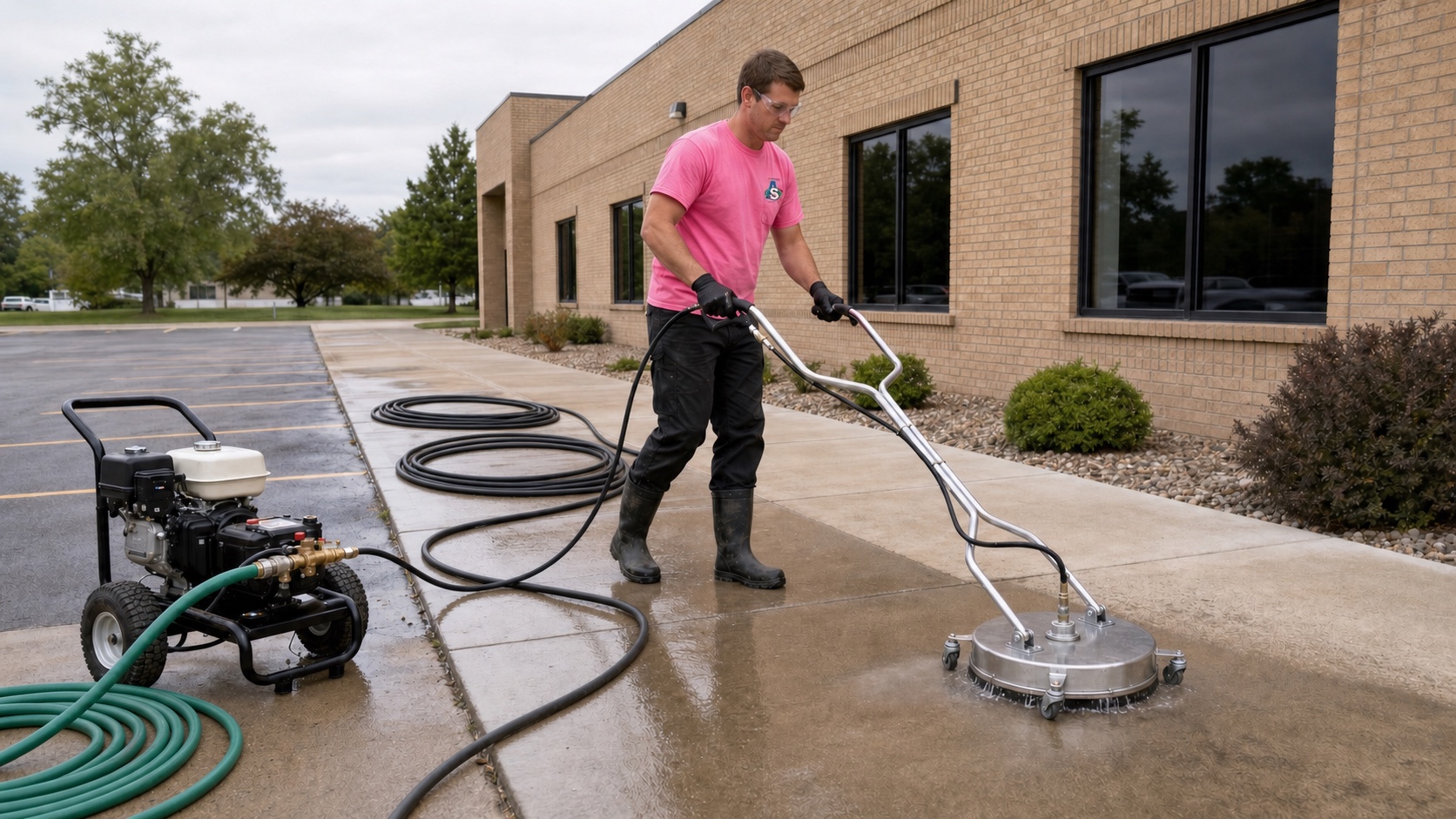
A dumpster pad is not simply another piece of concrete. It may contain loose trash, food residue, grease, leaking bags, unknown liquids, damaged pavement, enclosure walls, gates, drains, and active collection traffic. Before pressure washing is scheduled, the property and contractor should agree on the soil, surface, access, runoff requirements, and work that is outside an ordinary cleaning scope.
Start with container and hauling access
Confirm the waste-hauling schedule and whether the container will remain in place, be moved by the authorized provider, or make part of the pad inaccessible. A cleaning contractor should not assume permission or equipment to relocate a loaded dumpster.
Document:
- Container location and the concrete visible around it
- Gate swing, bollards, enclosure walls, curbs, and wheel stops
- Pickup and delivery times
- Locks, keys, or restricted access
- Vehicle routes and space needed for hoses and equipment
- Hours when nearby customers, employees, or residents use the area
If the container cannot be moved, the estimate should identify the reachable portion rather than imply complete coverage beneath it.
Identify soil and excluded material
Loose trash and ordinary surface soil differ from unknown chemicals, sharps, biohazards, active leaks, or regulated material. The property should remove or arrange proper handling for material outside the agreed cleaning scope.
Photograph grease, food residue, staining, paint, rust-colored marks, damaged concrete, and any drain or low area. Explain what caused the condition if known and what prior products have been used. Pressure washing cannot guarantee removal of every absorbed stain or odor, and it does not repair deteriorated concrete.
Check every surface in the enclosure
The pad may be bare or sealed concrete, asphalt, pavers, coated material, or a patched combination. Enclosure walls can be masonry, metal, vinyl, wood, or another finish. Each surface has different pressure and product limits.
Inspect cracks, scaling, loose mortar, failed coatings, damaged gates, seals, electrical components, signs, and nearby landscaping. A small test area may help assess compatibility, but results can vary across repaired or differently aged sections.
Define runoff and drainage before work
Dumpster areas can slope toward a drain, alley, parking lot, landscape bed, building, or neighboring property. Identify the direction before water is introduced. The property representative should provide municipal, landlord, facility, and environmental requirements that apply to containment, drainage, and disposal at that site.
The estimate should specify any approved containment or recovery steps included. It should not promise that wastewater will go to a particular drain, assume that a drain is authorized, or claim compliance without confirming the property’s actual requirements.
Coordinate the cleaning method
Depending on the approved soil and compatible surface, a process may include loose-debris removal, appropriate pre-treatment, controlled agitation, pressure washing or another method, and recovery or rinsing as defined by the scope.
Pressure, flow, temperature, nozzle, distance, and accessories should be selected for the surface. More pressure does not guarantee a better result. Unknown residue, loose materials, damaged concrete, and sensitive enclosure surfaces may require a reduced method, exclusion, or specialized provider.
Build a practical estimate
Provide the pad dimensions, photographs, container and hauling information, water access, operating hours, soil history, drainage layout, and written property requirements. Ask whether enclosure walls, gates, bollards, curbs, approach pavement, or only the open pad are included.
All Clean Solutions can review those details within its broader pressure-washing service and quote the actual work through the dedicated Bismarck dumpster-pad cleaning service page. Service is available for eligible properties within approximately 50 miles of Bismarck; availability, method, and results depend on access, approved material, surface condition, weather, runoff requirements, and the final scope.