Dumpster pad cleaning
A commercial cleaning scope built around the pad and facility
A dumpster pad is not just another driveway. Container placement, loose waste, grease, food residue, traffic, surface material, enclosure access, nearby doors, drains, and facility rules can all change the plan. We define the compatible paved areas, preparation responsibilities, cleaning method, and realistic outcome before the service is approved.
Bismarck appointments can be planned around customer traffic, deliveries, container access, and a practical service window. Temperature, wind, precipitation, drainage, and the contamination present can affect whether the work proceeds as scheduled.
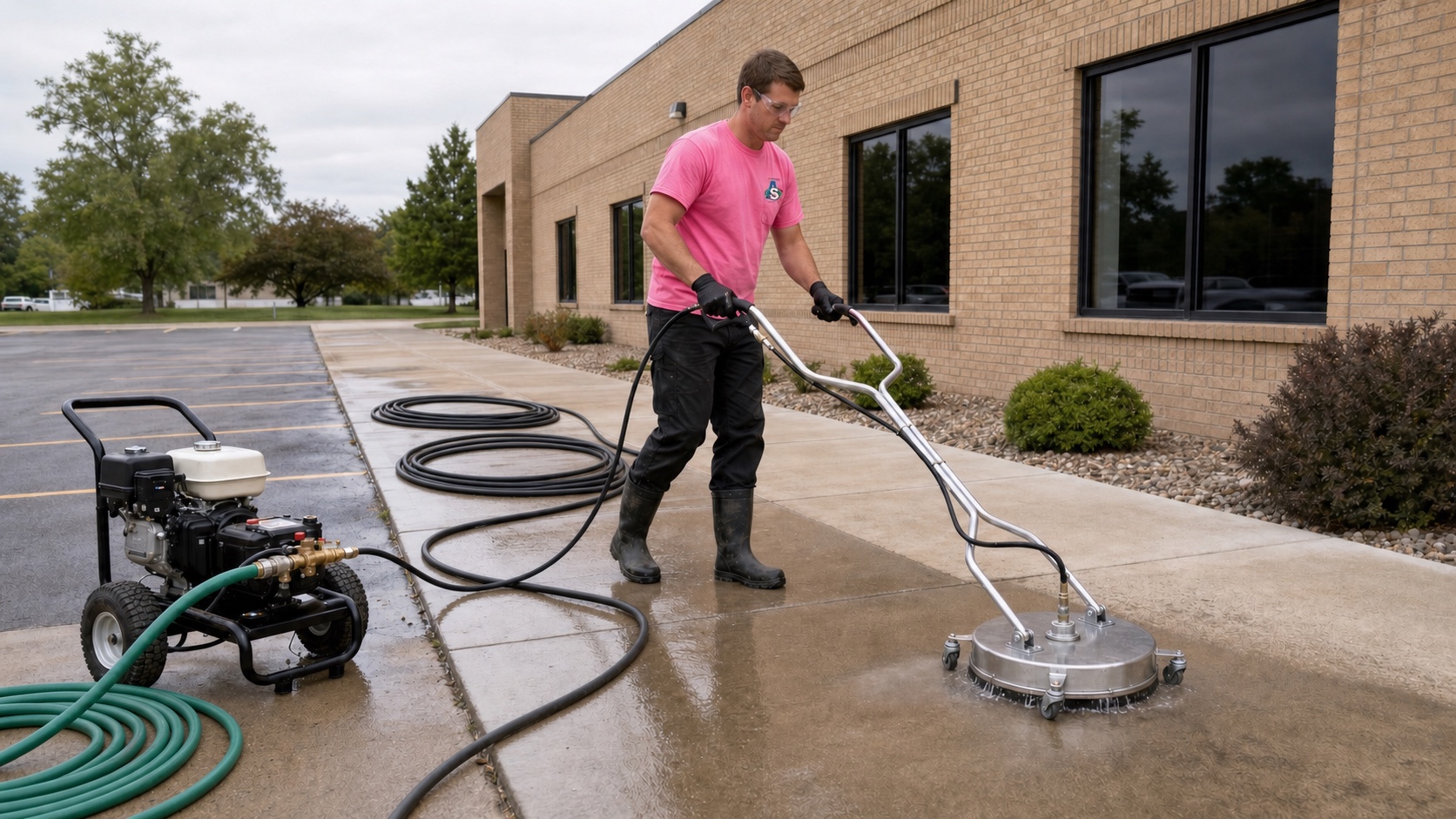
Compatible paved dumpster-pad surfaces listed in the estimateCompatible trash-enclosure floors and adjoining aprons when includedSurface and buildup inspection before products and pressure are selectedTargeted degreaser or pre-treatment for suitable grease and organic buildupHot-water pressure washing where appropriate for the surface and contaminationFinal rinse and review of the quoted work area