
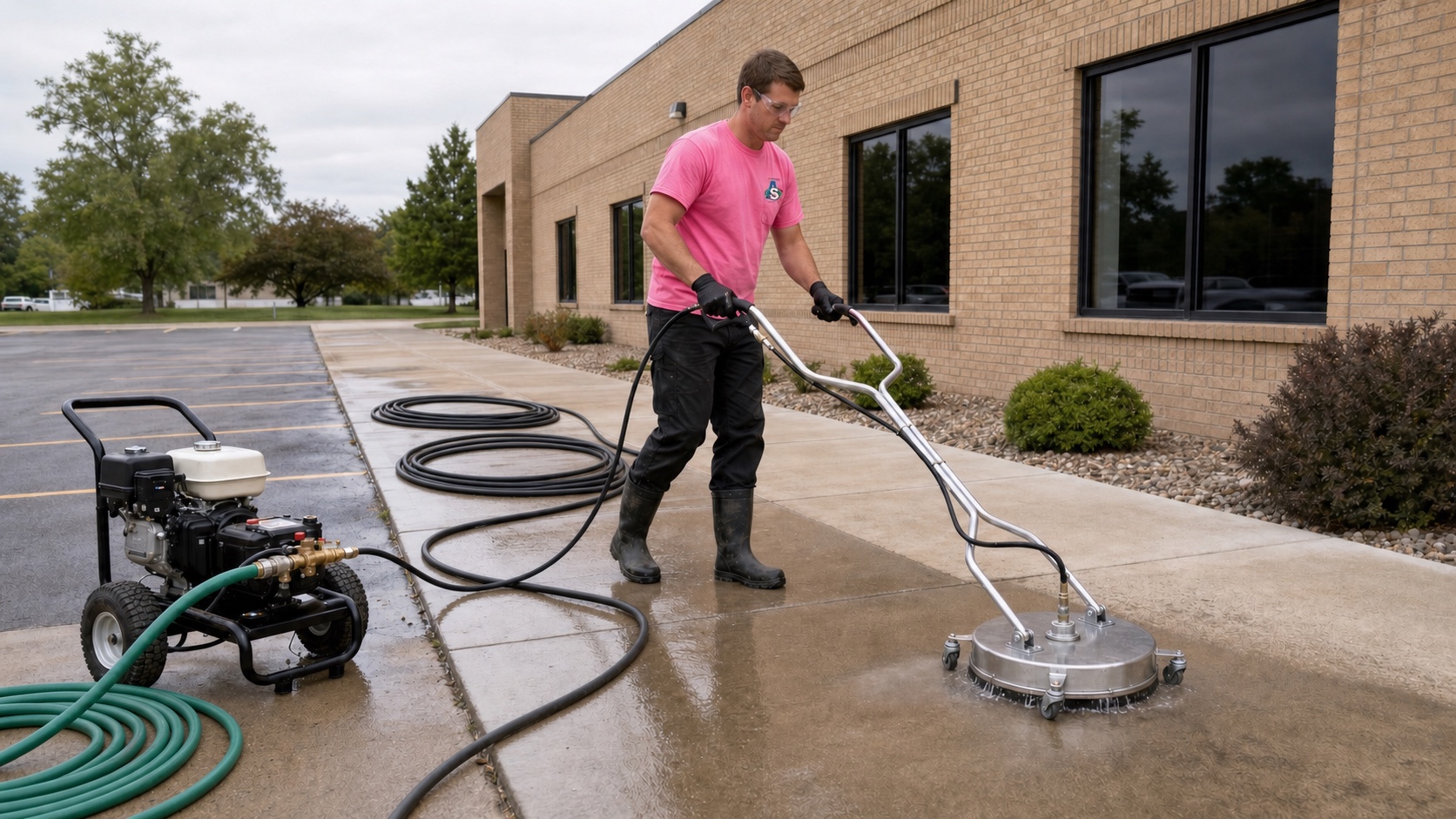
The best time to pressure wash is when the surface, weather, access, and property operations support the selected method. A date on the calendar is less important than workable temperature, low freeze risk, manageable wind and precipitation, clear access, and enough time for the area to drain or dry as appropriate. Surface condition and runoff requirements still need review before scheduling.
Do not schedule by season alone
Spring may reveal winter residue, summer may provide longer work windows, and fall may create a deadline before freezing weather. None of those labels guarantees suitable conditions on the service day.
Review:
- Current and expected temperature
- Frozen ground, remaining snow, or shaded ice
- Rain, lightning, wind, and visibility
- Surface temperature and condition
- Where water can travel or collect
- When customers, residents, employees, or vehicles need the area
If conditions make the method unsuitable or create an access problem, the project may need to be adjusted. Scheduling should remain case specific.
Let the cleaning goal guide timing
Different projects have different timing priorities. Post-winter concrete cleaning may wait until residue and damage can be evaluated without snow cover. A patio or outdoor seating area may need completion before furniture is installed. A storefront may need work during a low-traffic period. A shop or restaurant service area may need coordination with deliveries and operations.
State the goal when requesting an estimate:
- Remove ordinary seasonal soil from compatible concrete
- Prepare an entrance or patio for use
- Address a customer-facing commercial exterior
- Clean a service, loading, or waste area
- Coordinate exterior work before painting, repair, or another contractor
Pressure washing should not automatically be described as surface preparation for a coating or repair; the next contractor may have specific requirements.
Inspect the surface before the appointment
Concrete, masonry, siding, painted material, wood, metal, pavers, coatings, and sealants have different limitations. Photograph cracks, loose mortar, peeling paint, scaling, failed coatings, damaged caulking, and unusual stains.
Ask what caused the soil and what has already been applied. Cleaning can address compatible surface buildup but cannot guarantee removal of every stain, repair deterioration, or restore worn coatings. A test area may help assess compatibility without predicting every section.
Coordinate access and nearby work
Choose a service window that accounts for vehicles, pedestrians, residents, deliveries, landscaping, contractors, and business hours. Move light furniture, signs, planters, mats, hoses, and similar items when practical.
Identify locked gates, alarms, cameras, outlets, lighting, windows, open joints, low vents, damaged seals, and nearby materials that need protection. Heavy, fixed, connected, loaded, or fragile items should not be assumed to move.
If painting, landscaping, repairs, or construction will create new soil, decide which work should occur first. Cleaning too early can mean the surface is affected again before the property is ready to use.
Map runoff before selecting the day
Surface slope, drains, soil edges, neighboring property, door thresholds, and low areas determine where water may travel. The property representative should provide site, landlord, municipal, or facility requirements for water use, containment, drainage, and access.
Those requirements can affect equipment, method, work area, and scheduling. Do not assume every drain is approved or that one runoff plan applies to every property.
Request early, then confirm conditions
An early request gives time to review photographs, scope, access, and property rules, but it does not guarantee a particular appointment. Before service, confirm the weather, surface, water access, operating schedule, and changes at the site.
All Clean Solutions accepts requests for residential and commercial pressure-washing service at properties within approximately 50 miles of Bismarck. The final schedule, method, and expected results depend on crew availability, weather, surface compatibility, access, runoff requirements, and approved scope.