
The short answer: describe the kitchen before asking for a date
A useful restaurant-hood cleaning request starts with the kitchen setup, not just the desired appointment time. The hood system, cooking equipment, access, operating hours, grease condition, and requested records all affect how the work should be reviewed before a quote is confirmed.
For Bismarck, Mandan, Lincoln, and nearby North Dakota food-service properties, All Clean Solutions can review restaurant hood and commercial kitchen cleaning needs. The final scope should still be based on the actual system, safe access, shutdown window, and the cleaning areas approved in the estimate.
Name the type of kitchen
Start with the property type and how the kitchen is used. A restaurant line, bar kitchen, church kitchen, school kitchen, concession space, food truck, or facility kitchen may have different equipment, operating hours, and access limits.
The request should also say whether the kitchen needs hood-system cleaning only, selected kitchen degreasing, hard-floor cleaning, or a broader cleaning review. Those can be related services, but they should not be treated as one automatic scope.
Count the hood systems and filters
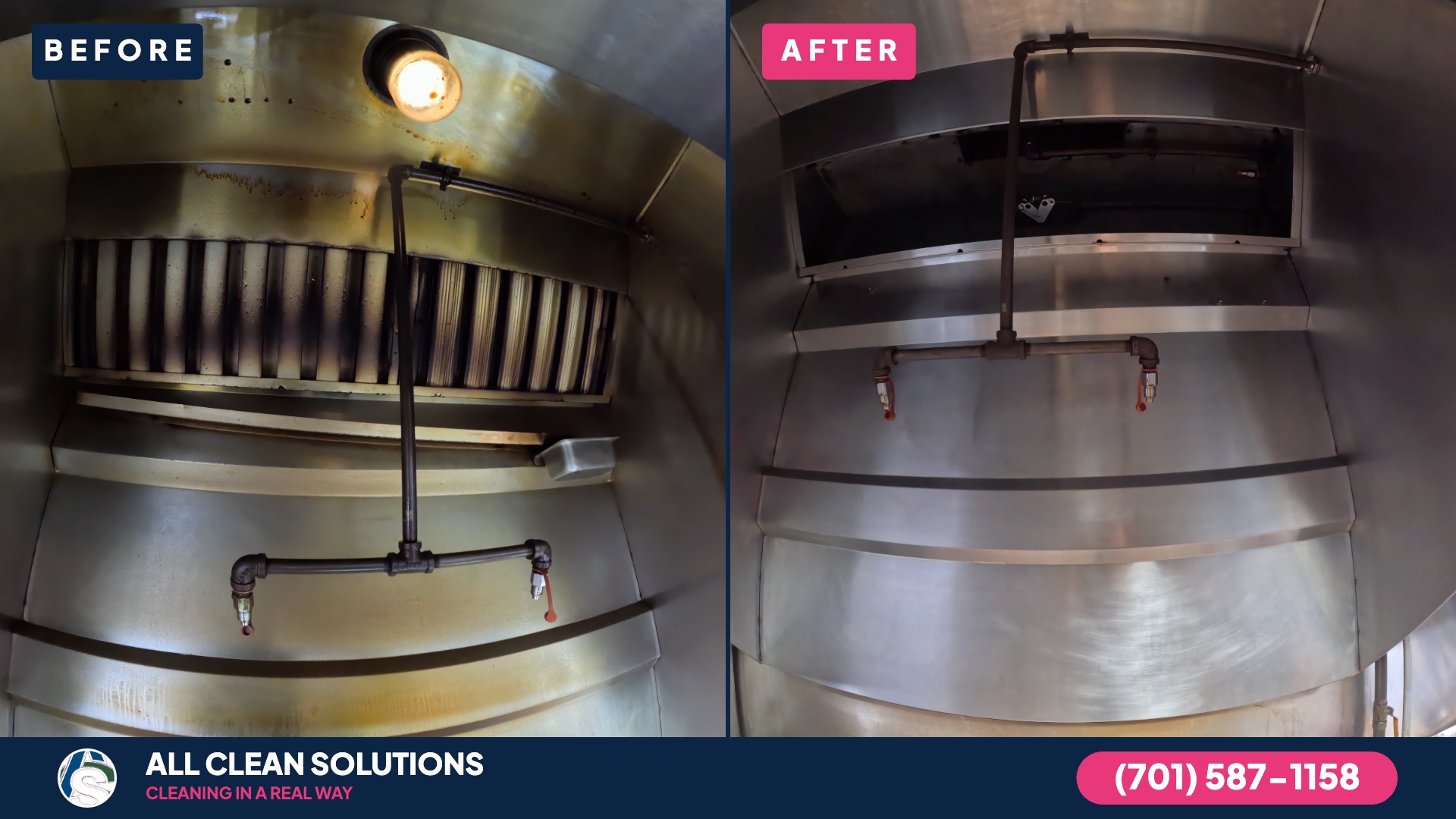
A clear request identifies how many hood systems need review, the approximate length of each hood, the number and type of removable filters or baffles, and the cooking equipment below the system. Photos are often easier than a long description.
Helpful photos include the full cooking line, the hood face, filters, visible plenum area, grease cups or channels, nearby floor and wall conditions, and the fan or roof access when it can be photographed safely. Do not remove panels, climb, or access restricted areas just to take pictures.
Explain the cooking equipment and grease load
The equipment under the hood matters because fryers, flat tops, charbroilers, ranges, ovens, and other appliances can create different grease and residue patterns. Menu type, cooking volume, long service hours, and recent busy periods can also affect what should be reviewed.
If the filters load quickly, the hood has visible residue, smoke capture seems different, odors are spreading, or grease is showing around seams or collection points, include that in the request. These observations do not replace an inspection, but they help the estimate start with the right concern.
Describe access and safety limits
Hood cleaning depends on access. Tell the estimator about roof access, locked doors, ladder restrictions, ceiling height, fan location, parking, water access, electrical shutoff expectations, floor drains, sensitive equipment, and any areas that cannot be wet or moved.
Access limits should be written down before the visit. Missing roof access, blocked equipment, unsafe surfaces, unknown electrical conditions, damaged components, or restricted areas can change what can be cleaned and documented.
Choose a realistic shutdown window
Commercial kitchen work needs a window when cooking is stopped and the area can be protected. Share normal operating hours, the earliest access time, when staff need the kitchen back, and whether overnight, early-morning, or closed-day work is preferred.
Requested timing is not the same as a confirmed appointment. Crew availability, system condition, dry time, access, travel, and any additional cleaning areas still need to be reviewed before the schedule is locked.
Separate records from promises
If the restaurant needs photos, service notes, invoice details, a dated service summary, or other records for its own files, say that before the quote is finalized. The requested documentation should match what All Clean Solutions can truthfully provide for that specific visit.
Hood cleaning records are not the same as regulatory approval, fire-suppression service, mechanical repair, or an inspection by an authority, insurer, landlord, or equipment professional. Those responsibilities should stay visible instead of being hidden inside a vague cleaning request.
Include nearby kitchen cleaning only when it is wanted
Many restaurants also ask about compatible stainless surfaces, equipment exteriors, walls, floor edges, traffic lanes, or hard-floor degreasing near the cooking line. Those areas should be listed separately because they may need different tools, surface checks, drying time, and access.
The hood cleaning versus kitchen degreasing guide explains why the exhaust path and surrounding kitchen surfaces are related but different scopes. A quote can combine them when the property, access, and shutdown window support it.
What to send with a hood-cleaning request
A strong first request includes:
- The business name, property address, and best contact
- The kitchen type and normal operating hours
- The number and approximate length of hood systems
- The filter count and cooking equipment below each hood
- Photos of the hood, filters, cooking line, floor, and safe access points
- Known grease buildup, odor, smoke-capture, or rapid filter-loading concerns
- Roof, fan, water, drain, parking, ladder, or key access notes
- The preferred shutdown window and when the kitchen must reopen
- Any requested photos, notes, or records
- Any nearby kitchen, floor, wall, or equipment-exterior cleaning that should be quoted separately
The All Clean Solutions restaurant hood cleaning page explains how access-based hood, filter, duct, fan, and commercial kitchen cleaning estimates can be reviewed for Bismarck-area properties. If the same property also needs floor care, pressure washing, janitorial service, or other cleaning, the main services page can help route the request. The confirmed estimate should state what is included, what is excluded, and what depends on safe access.