
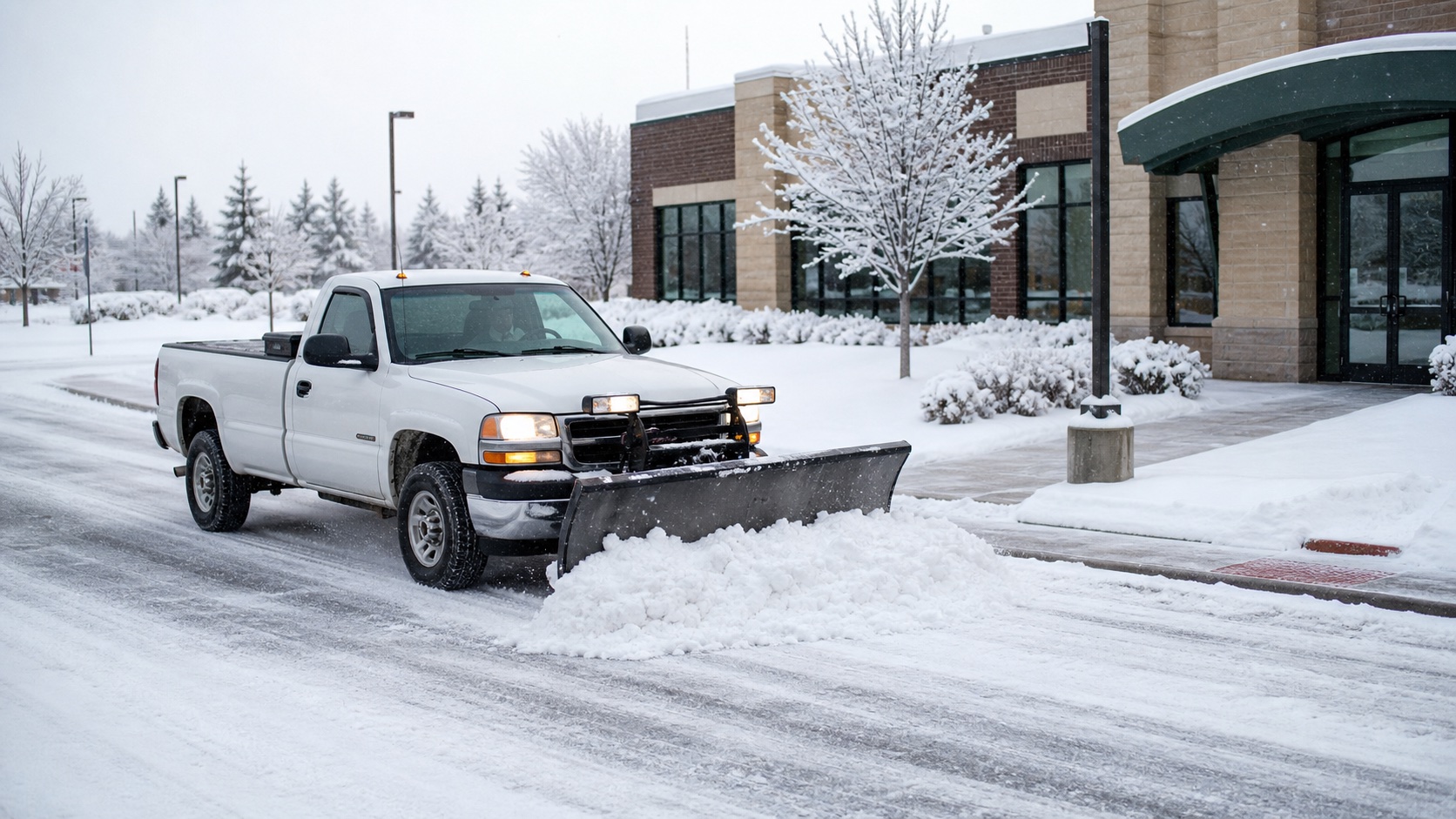
A professionally plowed parking lot should be open, organized, and usable, but it will not always look like dry summer pavement. During a North Dakota winter, a thin layer of packed snow, visible plow passes, or light tire tracks may remain after mechanical clearing.
That does not automatically mean the lot was poorly plowed. The finished condition depends on the snowfall, pavement temperature, traffic, wind, drifting, previous compaction, and whether ice has bonded to the surface.
Plowing moves snow; it does not always expose bare pavement
A plow removes the bulk of accumulated snow and opens travel lanes, parking areas, entrances, loading access, and pedestrian routes. If vehicles have already driven over fresh snow, the remaining layer can become compressed against the pavement.
Repeated melting and refreezing can make that layer bond more tightly. Mechanical scraping may improve the surface, but forcing every area down to bare pavement is not realistic during every storm or temperature range.
A good result keeps important access usable
The most important question is not whether every square foot looks perfectly black. A practical snow-removal plan focuses on whether people and vehicles can use the property.
Priority areas commonly include:
- Main drive lanes and parking access
- Accessible parking spaces, curb ramps, and routes
- Customer and employee entrances
- Fire exits and emergency access
- Loading docks, delivery routes, and service doors
- High-traffic sidewalks and problem areas that refreeze
Snow should be stacked where it does not block visibility, drainage, entrances, or future plowing.
Temperature and traffic change the finished surface
Cold pavement can hold packed snow even after the loose accumulation has been removed. Traffic may polish that packed layer and make it slick. Wind can also refill areas that were previously cleared, especially around open lots and building corners.
During a long storm, a property may receive a maintenance pass to keep priority routes open and a later pass for widening, cleanup, stacking, or ice treatment.
Salt and sand have different jobs
Salt is a deicer that can help loosen or melt bonded snow and ice when conditions allow. Its performance changes as temperatures fall. Sand does not melt ice; it adds traction.
The appropriate treatment depends on temperature, surface conditions, property use, drainage, and the agreed service plan. Applying more material is not automatically better.
What should a customer expect?
A realistic professional result may still show packed snow, light residue, scrape patterns, and tire marks. Customers should expect the agreed priority areas to be serviced, travel routes to be opened, snow to be placed thoughtfully, and changing conditions to be addressed according to the property plan.
All Clean Solutions provides commercial snow-plowing and ice-management estimates for properties within approximately 50 miles of Bismarck. Before winter, we can review entrances, parking areas, loading access, known drifting spots, and snow-stacking locations so expectations are clear before the first storm. Dispatch remains subject to visibility, road conditions, closures, route capacity, and safe travel.