
The short answer: match the timing to the storm and the property
There is no single clearing schedule that fits every snowfall. A short, light event may only need one visit after the snow stops. A long storm, heavy accumulation, repeated drifting, or a property that must remain open may need maintenance passes during the event and a final cleanup afterward.
The right plan considers forecast conditions, actual accumulation, wind, temperature, business hours, traffic, and the property's agreed trigger depth. Planning those details before winter is more reliable than making every decision after snow is already falling.
When clearing during the storm makes sense
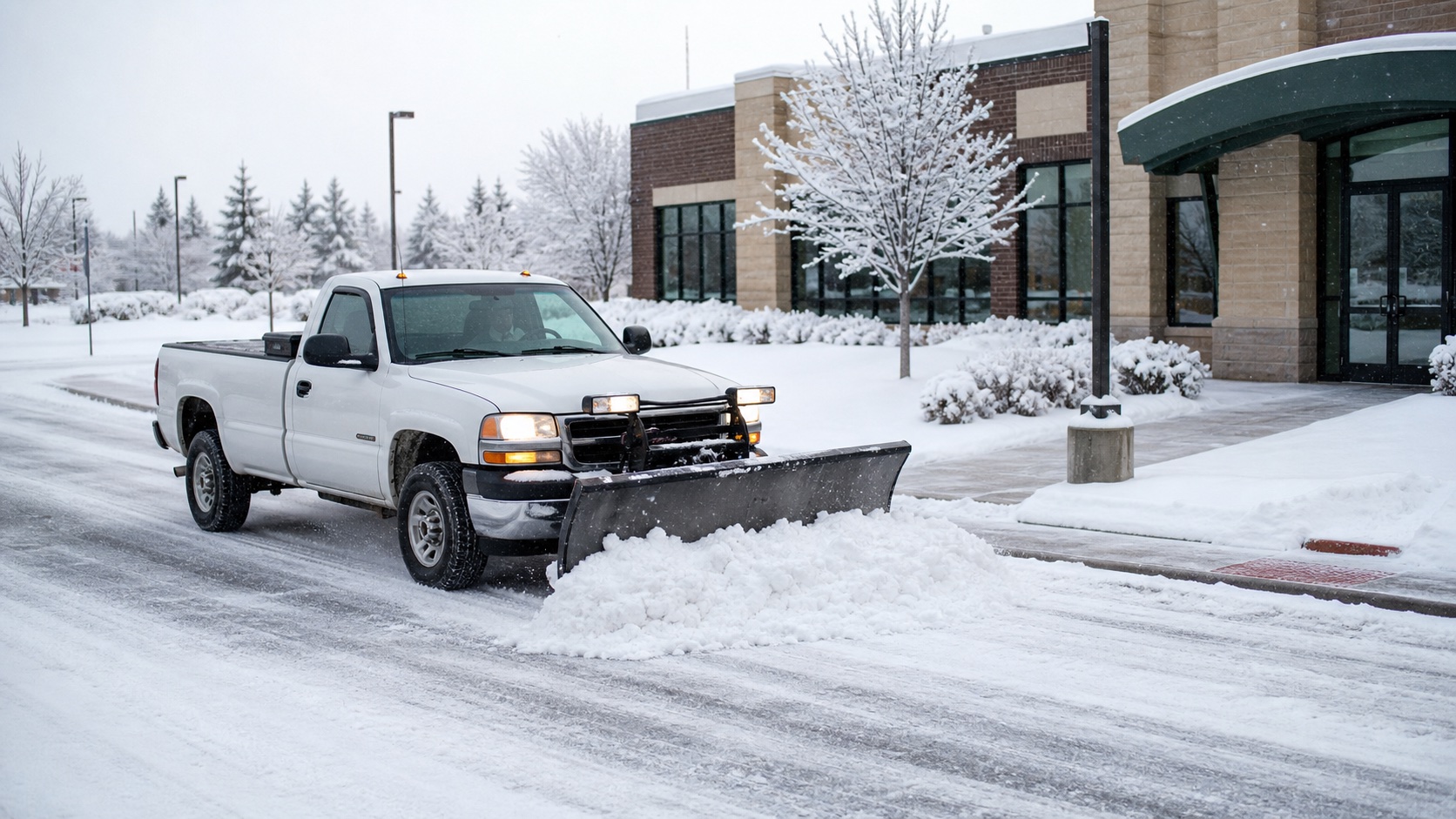
Clearing during a storm can help keep main entrances, accessible routes, drive lanes, fire exits, and delivery access usable. It is especially useful when snow continues for many hours or vehicles will keep driving over the lot.
A maintenance pass is not always the final result. Snow may continue falling, city plows may leave new windrows near entrances, and wind may refill cleared areas. The crew may need to return after conditions settle for widening, detail work, snow stacking, or ice treatment.
When waiting until the storm ends may make sense
For a smaller snowfall or a property with little overnight traffic, one post-storm visit may be more practical. Safety still comes first: visibility, road conditions, drifting, and official travel guidance can affect when equipment can operate.
Why packed snow is harder to remove
Vehicle and foot traffic compress snow against the surface. Temperature changes can then melt and refreeze that layer, allowing it to bond more tightly to pavement. Once snow is packed, plowing alone may not expose bare pavement. Scraping, deicer, traction material, or later follow-up treatment may be needed.
What to expect during a major regional storm
Large storms affect many properties at the same time. Wind, drifting, low visibility, road conditions, equipment travel, and repeated accumulation can lengthen service times. A practical service plan identifies the areas that matter most so crews can concentrate first on essential access and return for detail work as conditions allow.
Build the plan before the first snowfall
Before winter, decide the trigger depth, priority areas, operating hours, obstacle locations, snow-stacking areas, and who should receive service updates. All Clean Solutions provides commercial snow removal and ice-management estimates in Bismarck, Mandan, Lincoln, and other communities within approximately 50 miles of Bismarck. Storm dispatch remains subject to visibility, road conditions, closures, route capacity, and safe travel.