
The short answer: match the tool to the surface
A shovel, snow blower, and plow solve different parts of the same winter problem. The useful question is not which machine is best overall. It is which method fits the surface, accumulation, traffic, obstacles, and available snow-storage space.
A Bismarck property may need all three methods during one visit: a plow for the parking area, a snow blower for longer walks or tight approaches, and shovels for steps, doorways, corners, and final detail.
When a shovel makes sense
Shovels are useful for steps, short sidewalks, doorway edges, narrow spaces, hydrants, and detail work around fixed obstacles. They offer control where larger equipment cannot fit.
Hand clearing becomes slower as the area, depth, weight, or drifting increases. A shovel can still finish edges after equipment handles the open area, but using it as the only method for a large lot or long walk may delay access.
When a snow blower makes sense
A snow blower can be more efficient on longer sidewalks, deeper accumulation, narrow driveways, and areas too confined for a plow. It can place snow farther from the cleared path instead of leaving a ridge directly beside it.
That placement still needs planning. Chutes should not send snow toward people, vehicles, doors, windows, neighboring property, or public travel areas. Wind direction matters too: light snow can blow back across a cleared route or reduce visibility.
When a plow makes sense
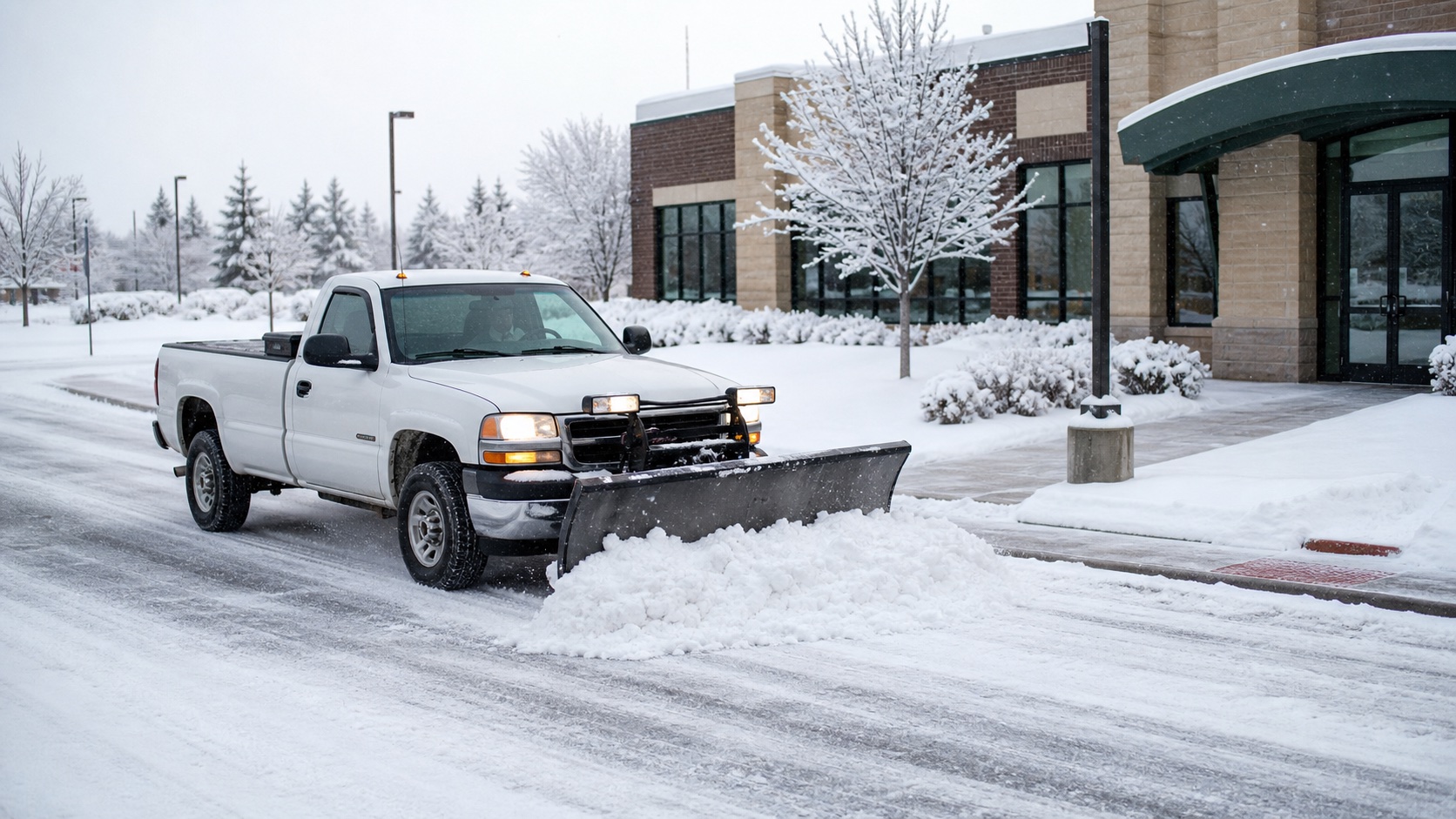
Plows are designed to move snow across larger paved areas such as parking lots, broad drive lanes, and commercial access routes. They need room to maneuver and a planned stacking location. Curbs, islands, parked vehicles, trailers, cart corrals, signs, loading areas, and raised structures should be identified before snow covers them.
A plow is efficient in open areas, but it cannot clean tightly around every vehicle or obstacle. Packed traffic lanes, ice bonded to pavement, and detailed pedestrian areas may require scraping, traction material, or a separate follow-up method. If snow piles begin taking needed parking or blocking sightlines, relocation or snow hauling may need to be quoted separately.
Should vehicles be moved before plowing?
Yes, whenever practical. Open parking areas allow a plow to make cleaner passes and reduce strips of snow around vehicles. Movable carts, trailers, and temporary obstacles should also be relocated. If vehicles cannot be moved, the service plan should explain which areas can be cleared and whether a return visit is needed.
Bismarck snow placement changes the decision
The City of Bismarck's snow-removal guidance says owners must clear adjoining sidewalks within 24 hours and must not move private-property snow into a public street, alley, or right-of-way. That makes the planned destination part of the equipment decision, not an afterthought.
A narrow property with little stacking room may need a different plan than an open lot even when the square footage is similar. Before service, identify public rights-of-way, accessible routes, fire exits, hydrants, mailboxes, dumpsters, drains, visibility corners, and areas reserved for stored snow.
Match the method to priority access
List the areas in the order they matter to the property: main entrances, accessible parking and routes, fire exits, employee walks, drive lanes, loading access, dumpster access, and less-used sections. The estimate can then assign a plow, blower, shovel work, salt or sand, and any return visit to the actual area.
For timing questions, see when to clear snow during or after a storm. A long or drifting event may need maintenance passes, while a smaller event may only need a final post-storm visit.
Information that helps produce a useful estimate
Provide the property address, approximate lot and sidewalk areas, business hours, priority entrances, loading-dock needs, obstacle locations, drifting problems, trigger depth, ice-management needs, and preferred snow-stacking areas.
All Clean Solutions can review those details and build a property-specific snow-removal plan for addresses within approximately 50 miles of Bismarck. Lincoln customers can also compare snow work with other available property services in the Lincoln service hub. The confirmed scope should state which areas and methods are included instead of promising that one piece of equipment will solve every condition. Storm dispatch remains subject to visibility, road conditions, closures, route capacity, and safe travel.