
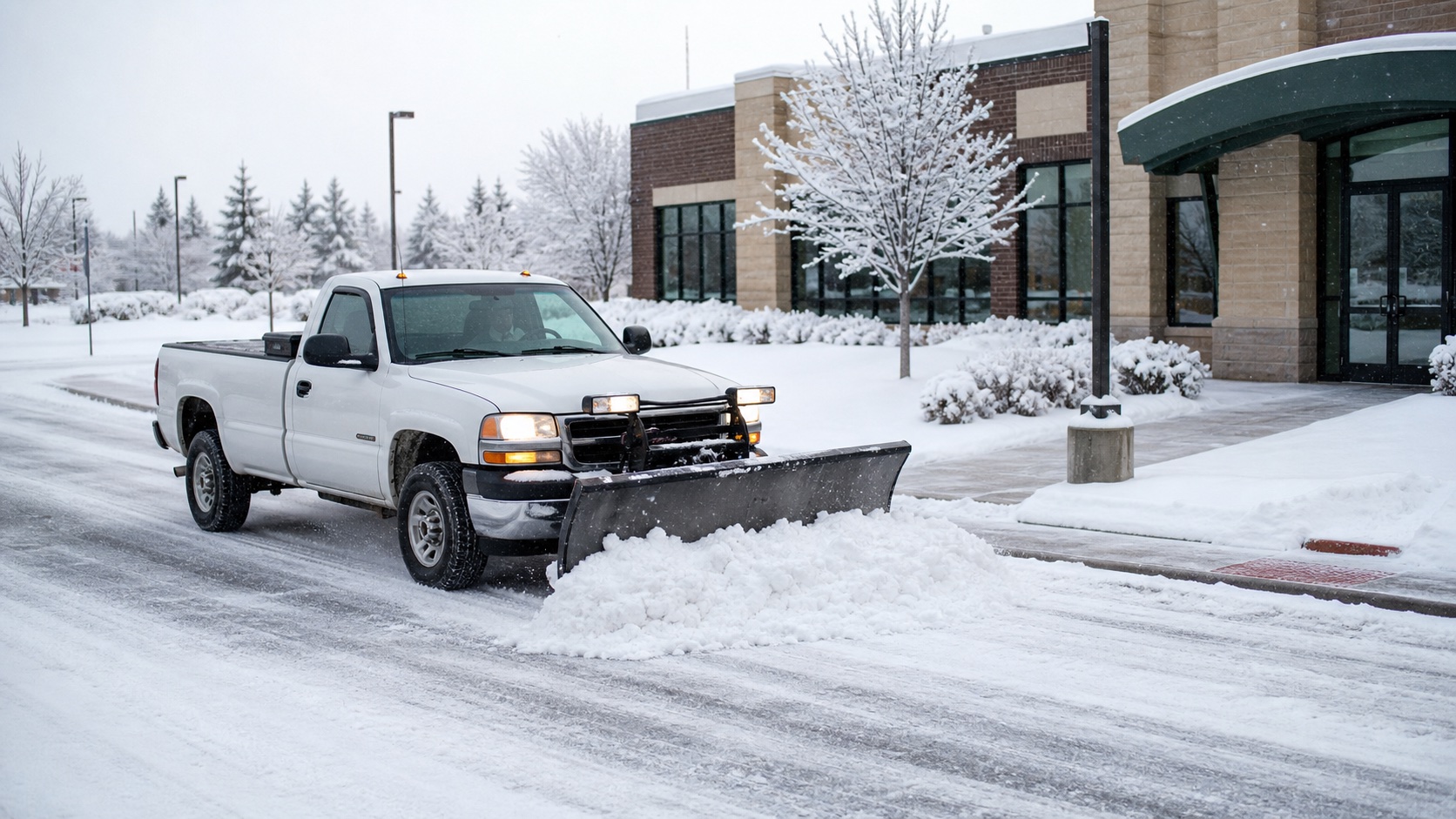
Snow removal often becomes urgent only after the first storm reaches the forecast. By then, property owners may be trying to define service areas, explain priorities, move parked vehicles, and decide which entrances need attention first.
For Bismarck, Mandan, Lincoln, and nearby North Dakota communities, the better time to make those decisions is while curbs, drains, pavement edges, signs, and other property features remain visible. A practical plan gives the customer and service provider a shared checklist before snow, wind, traffic, and limited access complicate the work.
Map every area included in the quote
Not every property needs the same snow removal plan. A retail entry, church sidewalk, rental driveway, office parking area, service door, dumpster path, and residential walkway all have different priorities.
Before winter, walk the property and identify the exact areas that may be included:
- Main entrances, sidewalks, steps, ramps, and walk paths
- Driveways, parking stalls, loading areas, and alley access
- Trash, delivery, utility, and service access points
- Tenant, customer, employee, and visitor routes
- Places that drift, refreeze, or collect packed snow
Mark disconnected sections, private roads, parking islands, and boundaries shared with a neighboring property. A clear quote should name the actual service areas instead of relying on a broad instruction such as “clear the property.”
Then rank the priorities. A storefront may need its customer entrance and main drive lane opened first. An apartment property may prioritize building walks, private drives, and trash access. A homeowner may need the driveway and one entrance before a less-used walkway.
Identify obstacles while they are visible
Snow can hide low curbs, wheel stops, parking islands, drains, utility covers, decorative borders, mailbox bases, landscaping, and uneven pavement. Property markers, notes, or pre-season photographs can help clarify where equipment can travel and where slower detail work may be necessary.
Movable obstacles need a plan too. Decide who will relocate vehicles, trailers, carts, temporary signs, and trash containers. If those items remain in place during service, the crew may not be able to reach the snow around them. The quote should explain whether a later return is included or would require separate approval.
Agree on the trigger and service expectations
A service trigger is the agreed condition that begins the planned response. It may consider accumulation, business hours, drifting, property access, or another condition written into the quote. Customers should not assume that the trigger or timing used at another property automatically applies to theirs.
Storm duration, snowfall rate, visibility, wind, road conditions, parked vehicles, and area-wide demand can all affect the work. All Clean Solutions accepts snow-service requests around the clock, but request intake is not a promise of immediate dispatch or a fixed arrival time during every storm.
Choose snow-stacking locations before piles grow
Identify where snow may be stacked without blocking important parking, signs, sight lines, entrances, mailboxes, drainage, or fire and service access. The best location after one storm may become impractical after repeated accumulation, so the plan should include who can approve a different location.
When the property no longer has practical stacking space, snow can be restacked or hauling can be quoted separately. Hauling depends on pile volume, equipment access, travel, and disposal requirements; it should not be assumed to be part of ordinary plowing or shoveling.
Decide whether salt or sand belongs in the scope
Plowing, shoveling, and ice management are related but separate services. Salt may help loosen or melt snow and ice when pavement temperature and conditions allow. Sand can add traction, but it does not melt ice. Either material should be included only when it fits the property, conditions, and agreed quote. All Clean Solutions does not offer liquid de-icer.
Pay special attention to high-traffic sidewalks, north-facing entrances, steps, ramps, downspout areas, and low sections where meltwater may refreeze. A pre-season walkthrough cannot predict every ice condition, but it can identify locations that deserve a closer check.
Establish a simple communication plan
Confirm the primary property contact, a backup contact, access or gate instructions, operating hours, and the person authorized to approve scope changes. If photographs or service notes are important, request them during quoting so the team can confirm what documentation is practical; they are not automatically included with every visit.
After a storm, useful follow-up information includes the address, exact problem area, current conditions, when the issue appeared, and a photograph when available. That detail helps distinguish a later city-plow windrow, new drifting, a vehicle-blocked area, packed traffic snow, or a refreeze issue.
All Clean Solutions provides property-specific snow removal for residential and commercial properties within approximately 50 miles of Bismarck. The estimate can address plowing or shoveling areas, priorities, salt or sand, stacking space, access, and snow hauling when needed. Dispatch remains subject to visibility, road conditions, closures, route capacity, and safe travel.