
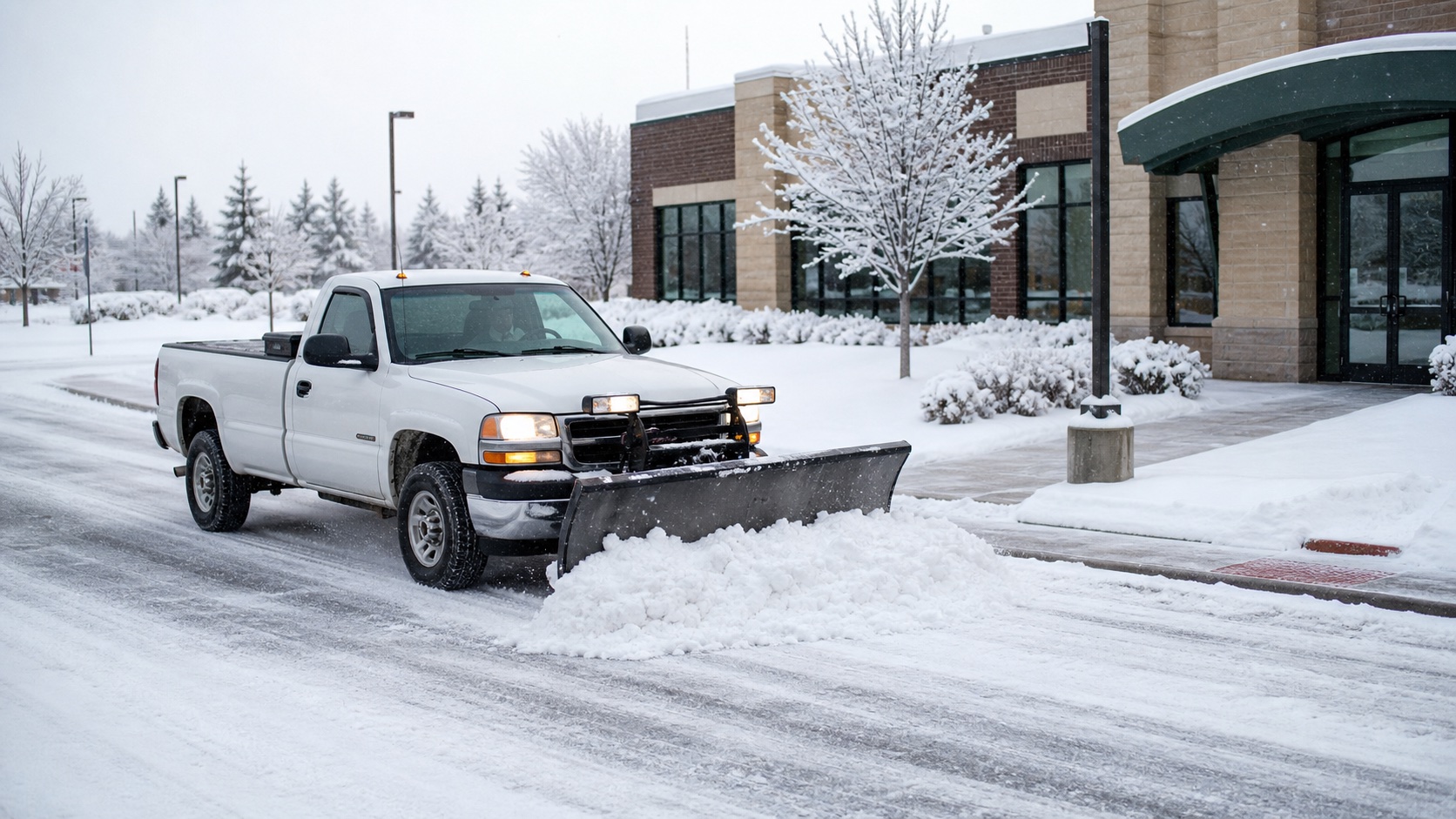
A small business should prepare for snow service by matching the property plan to its real operating day. Identify when employees arrive, which customer entrance matters first, where deliveries occur, which vehicles can be moved, and who can approve a change when conditions do not match the original quote.
Put business hours and access in the estimate
A business that opens at 5 a.m. has different priorities from an office that opens later or a restaurant with evening traffic. Share operating hours, employee arrival patterns, delivery windows, and any periods when the lot is likely to be full.
Those details help define priority areas, but they do not guarantee a fixed arrival time. Snowfall, wind, visibility, roads, regional demand, access, and the agreed trigger all affect scheduling. All Clean Solutions accepts requests 24/7; that request intake is not a promise of immediate 24/7 dispatch.
Identify one practical first-access route
Decide which drive entrance, parking section, and building entrance matter first when the whole property cannot be addressed at once. Include employee access, customer access, loading or delivery needs, and private walks only when they are part of the desired scope.
For a multi-tenant property, the manager may need to choose a shared priority rather than giving every tenant a different instruction. Put that decision in the plan before the first event.
Plan around vehicles and deliveries
Plowing is more effective when vehicles, trailers, carts, and temporary signs are moved from the quoted area. Decide who will notify employees or tenants, where vehicles can wait, and how a blocked section should be handled.
If delivery trucks or customer traffic cannot be moved, identify the areas that may remain unreachable. A later return is a scope and scheduling decision, not an automatic part of every visit.
Mark obstacles and snow placement
Before snow covers the pavement, mark low curbs, parking islands, drains, wheel stops, sign bases, utility covers, decorative edges, and other hidden obstacles. Select stacking areas that preserve the parking and access the business values most.
As piles grow, their location may need to change. Restacking or snow hauling can be added when quoted and practical for the property. Hauling depends on volume, access, travel, and disposal requirements.
Decide how ice-management requests will work
Salt can help loosen or melt snow and ice when conditions and temperature allow. Sand adds traction but does not melt ice. A business should decide which areas may need material and who can approve it if it is not already in the plan. All Clean Solutions offers salt and sand when quoted, but not liquid de-icer.
Keep contact information current
Provide one main contact and a backup who understand the property. Update gate codes, access instructions, operating changes, new obstacles, and approved stacking locations during the season. If the business wants notes or photographs, discuss that during quoting because documentation is conditional rather than automatic.
All Clean Solutions reviews residential and commercial snow removal and ice-management requests for addresses within approximately 50 miles of Bismarck. Estimates are based on the property, requested areas, conditions, and service options. Dispatch remains subject to visibility, road conditions, closures, route capacity, and safe travel.