
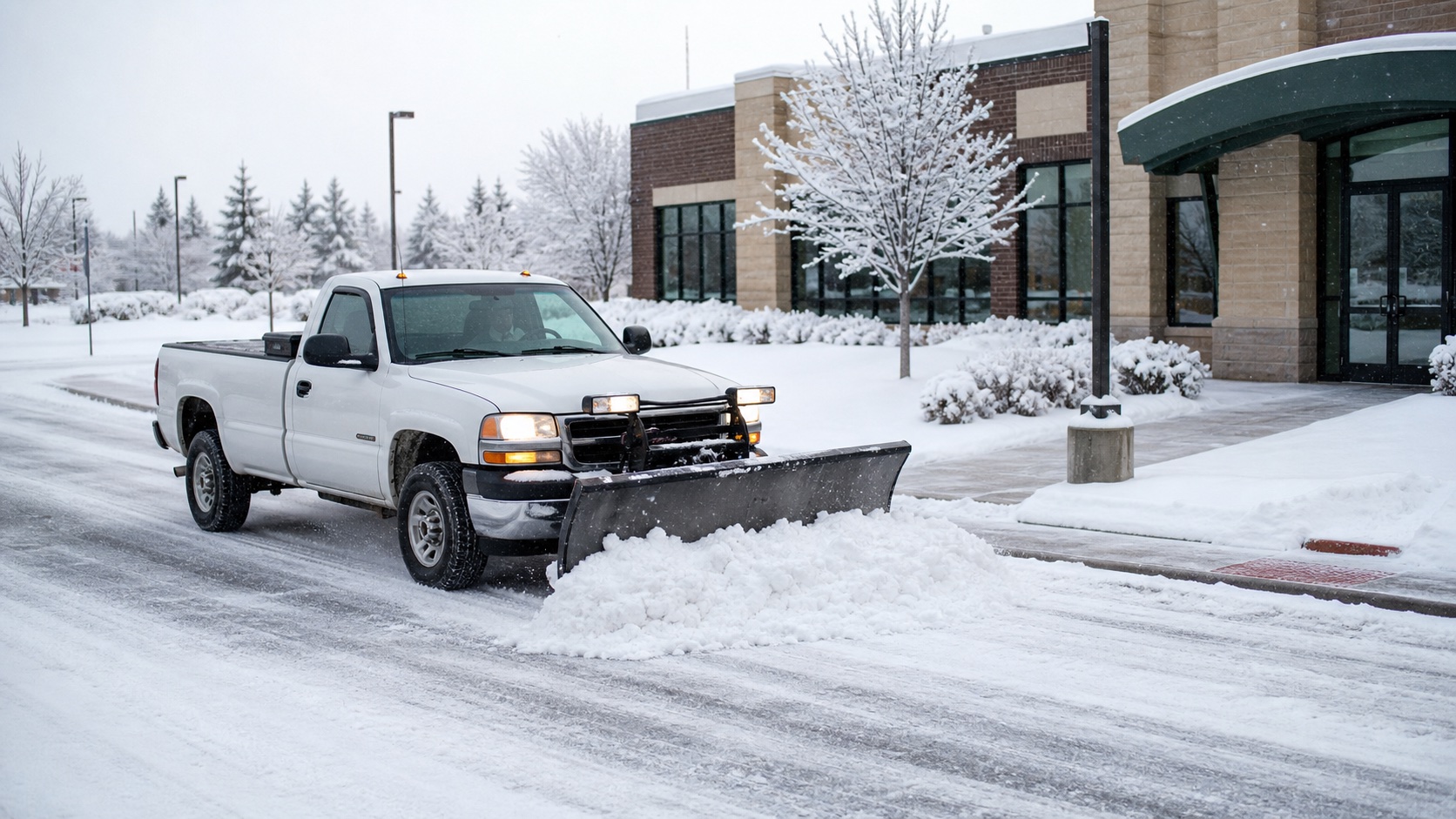
The first sidewalk areas to address are the routes the property actually relies on: primary entrances, connecting walks, steps, employee or tenant approaches, and narrow places where snow cannot be moved with a plow. The exact order should come from the property's layout and operating needs, not a generic list copied from another building.
Trace the route people are expected to use
Walk the property before winter and identify the practical path from parking or a driveway to each entrance that is expected to remain available. Note connecting walks between buildings, private residential walks, steps, ramps, employee entrances, delivery approaches, and paths to shared areas.
A large property may contain sidewalks that are rarely used. The estimate should distinguish priority routes from lower-priority or excluded sections so the customer and crew share the same expectations.
Match the method to the width and obstacles
Sidewalk work may involve a snow blower, shovel, suitable plowing equipment, or a combination. Steps, doorway edges, tight corners, railings, benches, planters, signs, utility boxes, and narrow gates often need more detail than an open straight walk.
Measure gates and confined approaches before assuming equipment will fit. Mark fragile edges, loose pavers, uneven sections, decorative borders, and anything else that could be hidden by snow. The crew can then review which methods are practical for the quoted area.
Decide where sidewalk snow can go
A narrow walk can be cleared only if the removed snow has a reasonable destination. Repeatedly pushing it beside the same path can narrow the route as piles build. Snow placement should also account for doors, visibility, parked vehicles, drainage paths, and areas the property wants to keep open.
After multiple events, snow may need to be moved to another stacking area or hauled from the property. Hauling is a separate scope decision based on the amount of snow, equipment access, travel, and disposal needs.
Watch for drifting, roof runoff, and refreeze
Some sidewalk sections refill because of wind, nearby roof runoff, downspouts, low spots, shade, or vehicle traffic crossing the path. Mark these recurring locations during the walkthrough. A route that looked acceptable after the first pass can change as wind shifts or meltwater refreezes.
Salt may be considered where conditions and the quoted scope allow it. Sand can add traction but does not melt ice. Neither material replaces mechanical clearing, and the selected material should be based on temperature, surface, traffic, and property needs. Liquid de-icer is not part of the current All Clean Solutions service.
Define the finish expected for each area
Fresh snow, packed snow, prior ice, surface damage, temperature, and continued precipitation affect the result. A service plan should say which walks are included, when they are evaluated, whether return work may be needed, and whether salt or sand is part of the quote. It should not promise that every surface will be completely bare in every condition.
All Clean Solutions quotes residential and commercial sidewalk and entrance snow removal for addresses within approximately 50 miles of Bismarck. Send the address, photographs or a property map, priority routes, obstacles, and operating hours so the requested work can be reviewed. Dispatch remains subject to visibility, road conditions, closures, route capacity, and safe travel.