
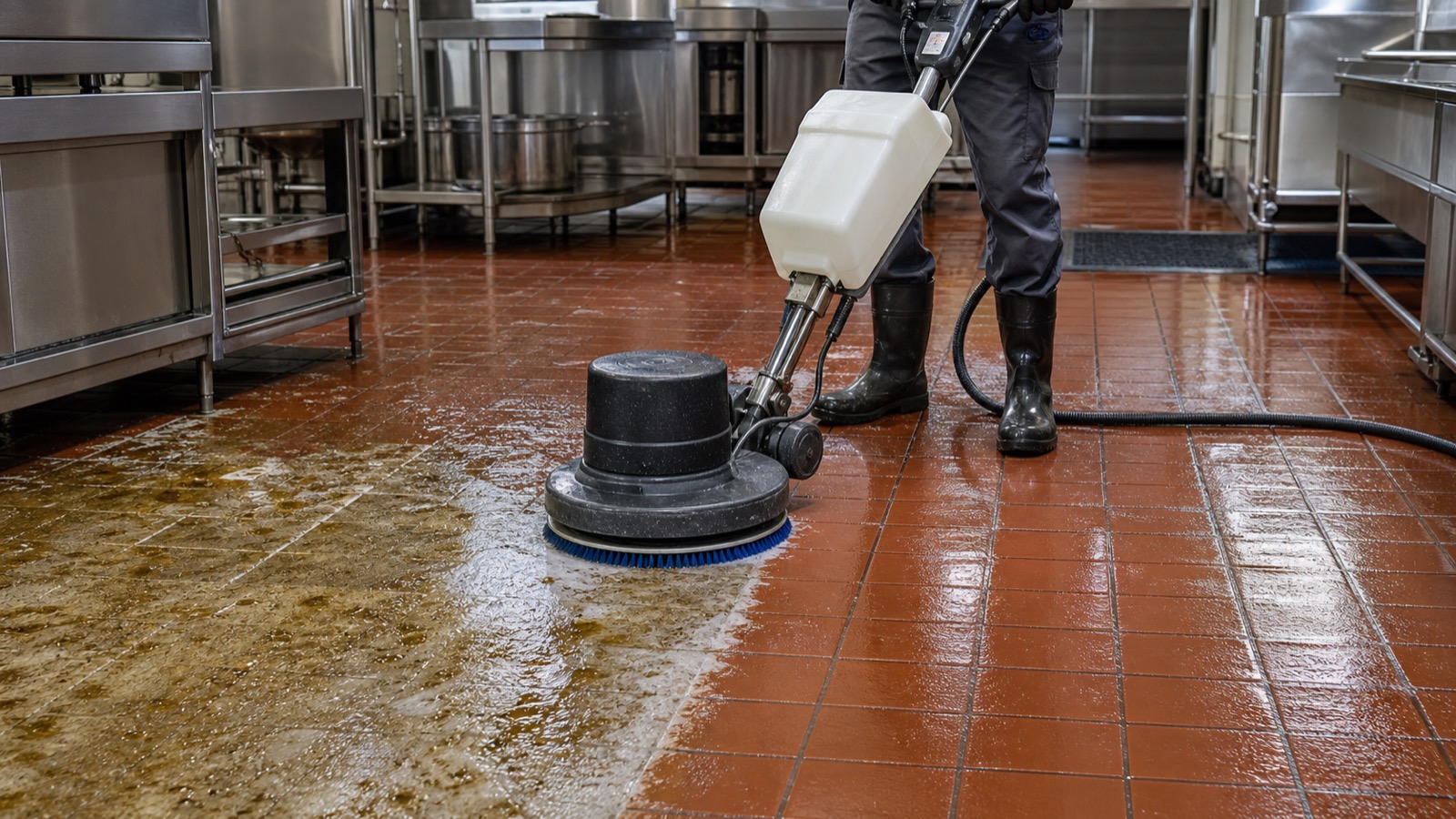
The short answer: mopping is maintenance, not every floor-care solution
Routine mopping is useful for loose soil, light spills, and daily upkeep. It is not designed to solve every traffic lane, greasy film, dull finish, edge buildup, or floor-care problem a business sees after weeks or months of use.
For Bismarck, Mandan, Lincoln, and nearby North Dakota properties, the right next step depends on the floor material, existing finish, traffic pattern, soil type, access, drying needs, and the result the business wants. All Clean Solutions can review commercial floor-cleaning and degreasing requests, but the quoted scope should be chosen after the actual floor is reviewed, not guessed from one photo or one room name.
Reappearing soil is a clue, not a diagnosis
If a floor looks dirty again shortly after mopping, the cause may be tracked-in grit, greasy residue, worn finish, product buildup, hard-water residue, salt residue, damaged grout, or soil collecting in texture that a flat mop cannot reach. Each cause points to a different conversation.
More chemical or harder scrubbing is not automatically the answer. The surface may need a compatible cleaning method, better agitation, detail work along edges, improved matting, a different maintenance rhythm, or a finish-related service. It may also have wear or damage that cleaning can improve only partly.
Traffic lanes and edges often need separate attention
Open center areas, entry lanes, checkout paths, kitchen routes, restroom approaches, and hallway turns rarely wear or soil the same way. A mop may pass over all of them, but the buildup can be heavier where people turn, stand, roll carts, or track moisture from outside.
Edges and fixture lines can be a separate issue too. Soil may collect along baseboards, under counters, near equipment feet, around floor drains, beside mats, or at thresholds. A useful quote should state whether those details are included, whether light movable items need to be cleared, and which fixed or heavy items stay in place.
Match the service to the floor and finish
"Floor cleaning" can mean several different things. Hard-floor cleaning may address compatible soil and residue on tile, resilient flooring, sealed concrete, or other surfaces. Degreasing may be discussed for compatible commercial kitchen, shop, loading, or work-area floors with greasy buildup.
Low-speed buffing, scrub-and-recoat work, VCT stripping and finishing, sealing, waxing, refinishing, and repair are different scope questions. They should not be implied just because the floor is dull. Floor type, finish history, coating condition, product compatibility, ventilation, water access, drainage, and business-hours limits all matter before any method is selected.
Timing and access can change the practical plan
The best method still has to fit the building. A restaurant, church, daycare, office, shop, or retail space may need work planned around customer traffic, staff schedules, locked doors, alarms, deliveries, tenant access, and when the floor must be usable again.
Drying and return-to-use depend on the method, floor condition, product directions, temperature, humidity, ventilation, and total area. A quote should not promise a return-to-traffic time or coat count before those conditions are reviewed. Some buildings may need phased work by room or zone instead of one full-property visit.
What to send before asking for more than mopping
A useful commercial floor-care request includes the property address, business type, floor material if known, finish or wax history if available, the rooms or zones involved, photos of the worst traffic lanes, edges, drains, equipment areas, and the times when work can happen.
Also explain the outcome you want in plain language: less tacky buildup, cleaner entry lanes, brighter grout, improved routine maintenance, a deeper degreasing conversation, or help deciding whether a finish-related service should be reviewed. The All Clean Solutions floor-cleaning page explains how commercial floor cleaning and degreasing estimates are handled for Bismarck-area properties. If floor care is part of a larger building reset, the commercial cleaning page can help separate routine janitorial work from project-based floor work.