
The short answer: describe the floor, the soil, and the access window
A useful commercial floor-care estimate starts with more than square footage. The floor material, current finish, traffic lanes, soil type, fixed fixtures, business hours, and access limits all affect what can be quoted and what should be excluded.
For Bismarck, Mandan, Lincoln, and nearby North Dakota businesses, those details help All Clean Solutions decide whether the request fits hard-floor cleaning, floor degreasing, low-speed buffing, a scrub-and-recoat conversation, or a full strip-and-finish conversation. No method should be promised before the surface, condition, and work window are reviewed.
Identify the floor and finish first
Start with the floor type if you know it: tile and grout, resilient flooring, sealed concrete, quarry tile, rubber flooring, laminate, or another surface. If the building has records for finish, sealer, coating, wax, or recent maintenance, gather those too.
The estimate should also note visible damage. Loose tiles, open seams, worn coating, cracked grout, soft spots, old adhesive, failed patches, and permanent staining can change the scope. Cleaning may improve compatible soil and buildup, but it does not repair the floor or guarantee that worn material will look new.
Separate open area from detail work
Approximate square footage helps, but it does not tell the whole story. A clear request separates open walking areas from edges, corners, thresholds, restrooms, kitchen routes, equipment perimeters, sales floors, hallways, break rooms, storage areas, and entry zones.
Fixtures matter because they change reachable floor area. Counters, booths, racks, desks, shelves, mats, carts, kitchen equipment, floor drains, and fixed machines should be listed or photographed. If light movable items can be cleared before service, say so. Heavy, loaded, connected, fixed, or fragile items should not be assumed movable unless a separate plan approves it.
Show where the buildup returns
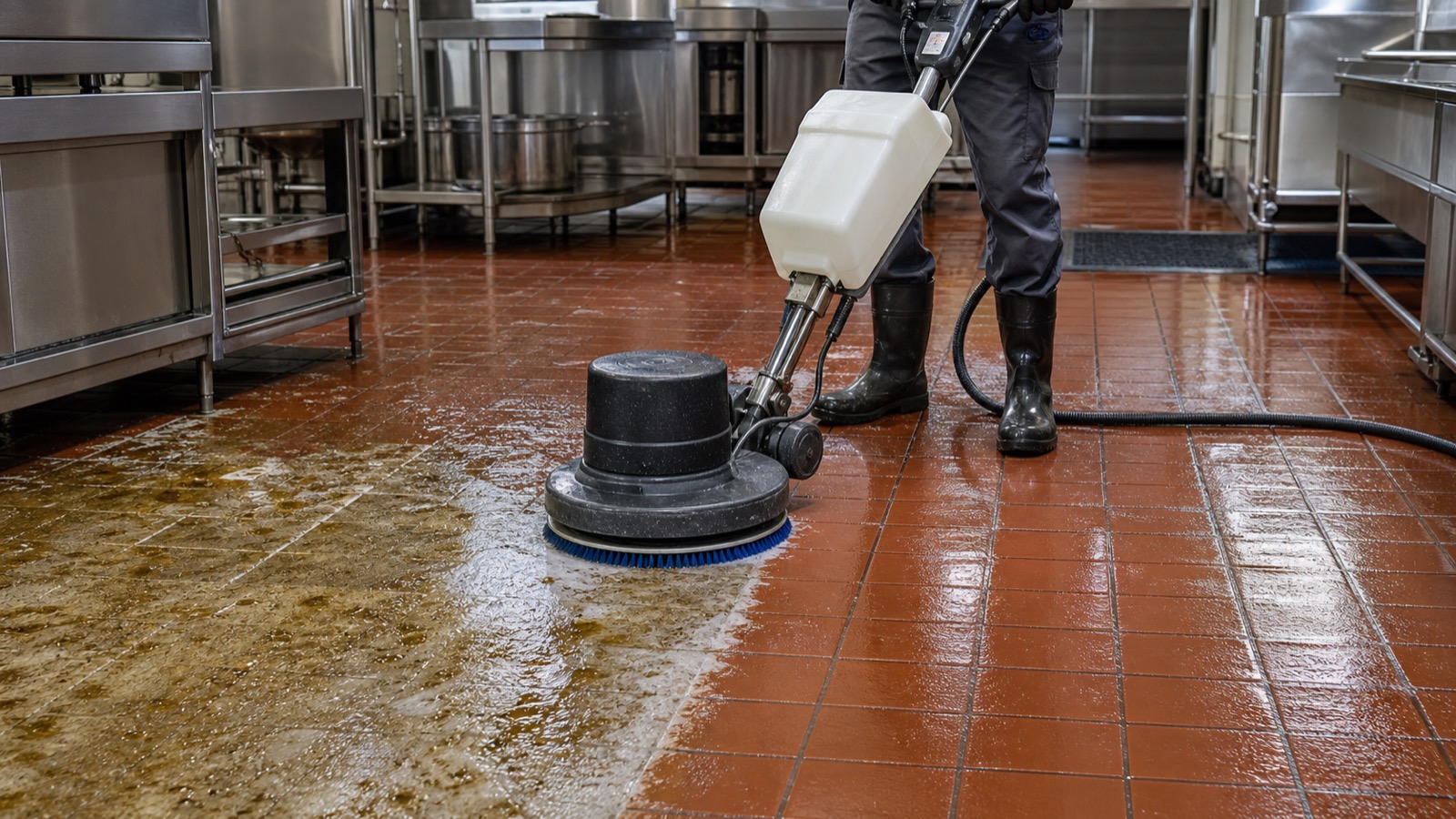
Commercial floors rarely soil evenly. Photos should show the worst traffic lanes, entrance paths, greasy or tacky sections, grout lines, dull finish, residue near equipment, salt-prone doors, and areas that look dirty again soon after routine cleaning.
That pattern helps separate daily-maintenance problems from deeper buildup. A restaurant kitchen, retail entrance, church hallway, shop floor, and office break room can all need different products, agitation, moisture control, and access planning. The restaurant floor-cleaning guide explains how grease can move beyond the cooking line, while the shop-floor cleaning guide covers soil and access questions for work areas.
Plan around business hours and return-to-use needs
The best method on paper may not fit the building schedule. Share operating hours, locked-door rules, alarm requirements, tenant access, delivery times, customer traffic, and the earliest time the floor must be usable again.
Drying, ventilation, temperature, humidity, product directions, floor condition, and total scope can all affect timing. All Clean Solutions should review those conditions before discussing what can be completed in one visit, phased by zone, or scheduled after hours. A quote should not promise a drying time or return-to-traffic time before the actual property is reviewed.
Ask for the exact result you want
Different words can mean different work. "Clean the floor" may mean removing surface soil. "Degrease" may mean addressing greasy residue in compatible commercial areas. "Buff," "recoat," "strip," "finish," "wax," or "restore" may involve a different inspection and approval process.
Use plain language about the outcome: less tacky buildup, cleaner grout, better-looking traffic lanes, easier routine mopping, a reset after heavy use, or a quote for a more involved finish-related service. The estimate can then state what is included, what is excluded, and what needs a separate review.
Send the details that make the estimate useful
Before requesting a commercial floor-care quote, gather:
- The property address and business type
- Floor material and known finish, coating, sealer, or wax history
- Approximate square footage by room or zone
- Wide photos plus close photos of the worst buildup
- Traffic lanes, entrance areas, grout lines, edges, drains, and equipment perimeters
- Movable items the customer can clear before service
- Fixed, heavy, connected, fragile, or restricted items that must stay in place
- Operating hours, access rules, and preferred service window
- Water, drainage, ventilation, security, or property requirements
- The result you want and any finish-related service you are asking about
All Clean Solutions provides property-specific commercial floor cleaning and degreasing estimates for Bismarck, Mandan, Lincoln, and nearby North Dakota businesses within approximately 50 miles of Bismarck. Businesses comparing several property-care needs can also start from the All Clean Solutions services page and request the exact combination of work that fits the building.